Trench Warfare: A New Way Of Thinking! "Revised Version"
Posted: Tue Dec 04, 2012 2:53 pm
The article in the show/hide box is my revised version of this article that I wrote for the Newsletter. It is approximately half as long (less than half actually) as the original. Many parts were deleted or altered and shortened from the original (very long) version.
I am basically posting this article for a new generation that might never read this if it is not reposted. This article represents my personal views and opinions on this strategy and all are free and welcomed to disagree with me if you wish and to let me know about it. =)
Thank You!
Trench Warfare, A New Way of Thinking. by Viceroy63
I am basically posting this article for a new generation that might never read this if it is not reposted. This article represents my personal views and opinions on this strategy and all are free and welcomed to disagree with me if you wish and to let me know about it. =)
Thank You!
Trench Warfare, A New Way of Thinking. by Viceroy63
Spoiler
Trench Warfare, A New Way of Thinking.
By Viceroy63
For the record, let me say that no Tournament Organizers or Players of this type of setting were consulted for the writing of this article. This is simply my understanding of "Slow and Gradual Expansionism" which is how this type of game is won. At least that is the impression that I get after reading so many forum threads about Trench Warfare. Anyone wishing to correct or add further to my understanding of the following ideas and concepts is most welcomed to leave comments. I shall very much enjoy any and all dialog about this topic, especially if you have played or organized any TW games.
The strategy discussed in this article is applicable to the Multi-player Standard Games with escalating spoils only.
http://youtu.be/SXtsiqrhqsU
[1] I only recently learned about the new setting, “Trench Warfare.” and I assumed that it was some new World War I European map. But then I discovered that it was a new setting on the same old maps but with a different twist to it. For those of us who are unfamiliar with this new setting, let me quickly lay it out for You. No more marching across continents and regions and conquering the world in one single turn. With this setting you can only conquer Adjacent Territories or Regions and then you can go no further on that turn. You must wait until the next turn to conquer from any regions conquered then also wait until the next turn after that to attack from new regions conquered after that. Is everyone still with me so far?
[2] The setting is like for a time when armies fought and lived in trenches or dugouts and dug their way through the earth around to the enemy in order to outflank them. In their trenches they were safe from the flying bullets overhead, but the progress of the war efforts were slow and difficult. Now obviously this makes for a much longer game but it also allows for strategy and singular armies to play a more key role in the game. It also necessitates the forming of alliances. Something that in regular CC mode games is really not a desirable option because the game goes by so quickly (in the majority of the games) that no sooner is an alliance formed that the opportunity to take advantage of it by breaking the newly form alliance arrives. So why even bother?
[3] Now why am I of the opinion that alliances need to be formed in order to gain the advantage? Because the simple fact that there are no sweeping attacks mean that the world has to be conquered systematically by way of slow expansionism. There simply is no other way. In other words the single (1) standing army is now the objective to achieve, and not the different stacks. So then forming an alliance, and an early one at that, can only help to facilitate the slow and gradual process of expansionism.
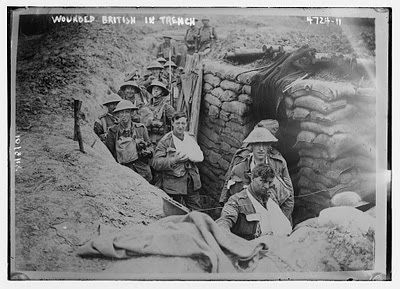
[4] The stacks are now delegated to the position of a standing army in that Zone on TW games. It can not effect another zone or jump to another zone but must move around within it's adjacent regions one region at a time per turn. Since the standing army can only effect a zone more effectively than a stack (from a non TW game), because a stack no longer has any say in the matter because it no longer exist with the potential power that it does in a regular CC game map, then a strong standing army is what is required for the control of a zone.
[5] Now obviously the standing army commands more control in a TW game then stacks. None of the stacks can successfully stand against or even reach a standing army. At least not in the same turn. The stacks must all be combined into one standing army in order to Challenge a standing army. So it is this kind of warfare between singular standing armies rather then correctly position stacks waiting to just jump into the game play, that is the order of the day.
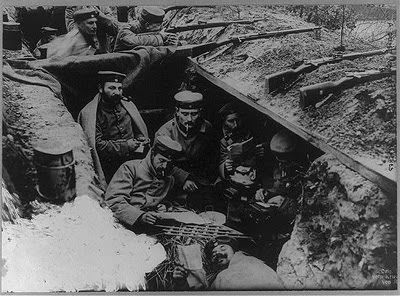
[6] Understanding this principle that the strategy of strong standing armies is the goal and not the stacks is why alliances then become a necessity. When you have to fight on all borders then you tend to distribute your troops more liberally because you are trying to hold on to all of your borders. But when one of your bordering sides is protected by an ally and naturally you are protecting your Allied border as well, then you can concentrate the distribution of your troops in a smaller area or region thus forming your standing army more easily. The player who establishes and maintains a standing army in their zones however, will eventually stand better then those who have only “stacks” here and there and everywhere.
[7] And so then this brings me to another thought. If slow and gradual expansionism is the way to win, as it is in TW games, then does it not make sense to concentrate all of your attention into a single zone and expand outwardly from there? Or does having stacks spread throughout the game map offer any real assistance in conquering the world? In other words, on the one hand you are trying to just grab a slice of pizza on the run and on the other hand you are trying for the whole pizza pie on the run? It seems to me that grabbing a slice on the run is more of a doable option than trying to grab the whole Pizza Pie.
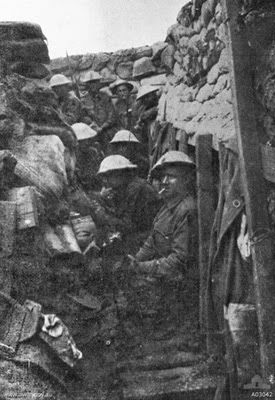
[8] Here again we see where the need for an early alliance comes into play. Say you are going to concentrate in North America on the classic map. Now at the same time another player is concentrating his efforts in Europe for example. Doing the same as you are and building a strong standing army in Europe at the cost of all of his other troops else where on the game map. Does it not make sense then that if North America and Europe form an Alliance that the border of Montreal and Reykjavic need not be built upon thus allowing the North American standing army to concentrate to the West and to the South. Similarly the European standing army can also concentrate to the East and to the South? Because neither player need to concern themselves with the North American/European border, then both standing armies could concentrate their war efforts to the trenches at hand and thus expand each one in their different, other directions.
[9] But some may ask? “Shouldn't one wait to see how the others are developed before allying yourself to anyone?” I say, “No!” The whole point of an alliance is to make it easier to develop in the first place. The sooner that alliances are made the sooner that the players can begin to benefit from those alliances. It matters not even if both armies are in the same zone, say in Asia. If in the early rounds an alliance is formed then one can develop to the East while the other develops to the West both covering each others borders making it easier to develop both armies and thus expand outward from there.
[10] Again I state that those who can form early alliances with other players, will have an advantage over those who do not. In the end, an early alliance can only; Promote stability in the regions; Create the possible card spot for those difficult situation or should troops become depleted; Assure protection to the borders of both players; Allow for the concentration of fire power in order to expand in other directions and; Most definitely gain the troop advantage over other players who are not allied to any other players in the game themselves. True that eventually alliances must be broken But I personally would rather enjoy the greater chance of making it to the number two position because I allied myself to another player, rather then face an early elimination from the game. Those who choose to go it alone will face just that in view of a superior standing army. An Early Elimination.
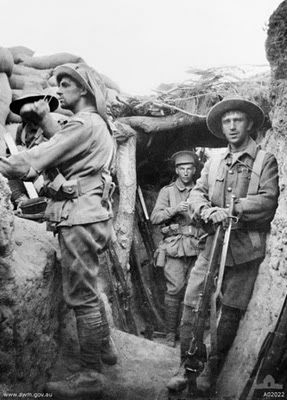
[13] So in summing this article up; The new way of thinking in Trench Warfare is the singular standing army and how best to build and to maintain it. You can not play this type of setting with the old style strategies and game play. A whole new book of strategy and game play must be written for TW games. The building and maintaining of one standing army in the zone and later on, another second standing army as the need arises in order to expand into other zones thus allowing for the maximum fire power possible is, in my opinion, the way to go in these types of games.
Expansionism can only come from a force that's within and that force is the singular standing army and not the strategically placed stacks all over the map that have little or no power in the face of a superior standing army. Those who commit to playing this type of setting with the old rule book are bound to learn a hard lesson in defeat.
All photos used in this article were compile from the following websites.
http://herolettersww1.blogspot.com/2010 ... m-wwi.html
And the Youtube Video from, Youtube.
Below is the link to the Original and unedited, Looong version of this article.
Trench Warfare: A New Way Of Thinking (The LOoong Version)
By Viceroy63
For the record, let me say that no Tournament Organizers or Players of this type of setting were consulted for the writing of this article. This is simply my understanding of "Slow and Gradual Expansionism" which is how this type of game is won. At least that is the impression that I get after reading so many forum threads about Trench Warfare. Anyone wishing to correct or add further to my understanding of the following ideas and concepts is most welcomed to leave comments. I shall very much enjoy any and all dialog about this topic, especially if you have played or organized any TW games.
The strategy discussed in this article is applicable to the Multi-player Standard Games with escalating spoils only.
http://youtu.be/SXtsiqrhqsU
[1] I only recently learned about the new setting, “Trench Warfare.” and I assumed that it was some new World War I European map. But then I discovered that it was a new setting on the same old maps but with a different twist to it. For those of us who are unfamiliar with this new setting, let me quickly lay it out for You. No more marching across continents and regions and conquering the world in one single turn. With this setting you can only conquer Adjacent Territories or Regions and then you can go no further on that turn. You must wait until the next turn to conquer from any regions conquered then also wait until the next turn after that to attack from new regions conquered after that. Is everyone still with me so far?
[2] The setting is like for a time when armies fought and lived in trenches or dugouts and dug their way through the earth around to the enemy in order to outflank them. In their trenches they were safe from the flying bullets overhead, but the progress of the war efforts were slow and difficult. Now obviously this makes for a much longer game but it also allows for strategy and singular armies to play a more key role in the game. It also necessitates the forming of alliances. Something that in regular CC mode games is really not a desirable option because the game goes by so quickly (in the majority of the games) that no sooner is an alliance formed that the opportunity to take advantage of it by breaking the newly form alliance arrives. So why even bother?
[3] Now why am I of the opinion that alliances need to be formed in order to gain the advantage? Because the simple fact that there are no sweeping attacks mean that the world has to be conquered systematically by way of slow expansionism. There simply is no other way. In other words the single (1) standing army is now the objective to achieve, and not the different stacks. So then forming an alliance, and an early one at that, can only help to facilitate the slow and gradual process of expansionism.
[4] The stacks are now delegated to the position of a standing army in that Zone on TW games. It can not effect another zone or jump to another zone but must move around within it's adjacent regions one region at a time per turn. Since the standing army can only effect a zone more effectively than a stack (from a non TW game), because a stack no longer has any say in the matter because it no longer exist with the potential power that it does in a regular CC game map, then a strong standing army is what is required for the control of a zone.
[5] Now obviously the standing army commands more control in a TW game then stacks. None of the stacks can successfully stand against or even reach a standing army. At least not in the same turn. The stacks must all be combined into one standing army in order to Challenge a standing army. So it is this kind of warfare between singular standing armies rather then correctly position stacks waiting to just jump into the game play, that is the order of the day.
[6] Understanding this principle that the strategy of strong standing armies is the goal and not the stacks is why alliances then become a necessity. When you have to fight on all borders then you tend to distribute your troops more liberally because you are trying to hold on to all of your borders. But when one of your bordering sides is protected by an ally and naturally you are protecting your Allied border as well, then you can concentrate the distribution of your troops in a smaller area or region thus forming your standing army more easily. The player who establishes and maintains a standing army in their zones however, will eventually stand better then those who have only “stacks” here and there and everywhere.
[7] And so then this brings me to another thought. If slow and gradual expansionism is the way to win, as it is in TW games, then does it not make sense to concentrate all of your attention into a single zone and expand outwardly from there? Or does having stacks spread throughout the game map offer any real assistance in conquering the world? In other words, on the one hand you are trying to just grab a slice of pizza on the run and on the other hand you are trying for the whole pizza pie on the run? It seems to me that grabbing a slice on the run is more of a doable option than trying to grab the whole Pizza Pie.
[8] Here again we see where the need for an early alliance comes into play. Say you are going to concentrate in North America on the classic map. Now at the same time another player is concentrating his efforts in Europe for example. Doing the same as you are and building a strong standing army in Europe at the cost of all of his other troops else where on the game map. Does it not make sense then that if North America and Europe form an Alliance that the border of Montreal and Reykjavic need not be built upon thus allowing the North American standing army to concentrate to the West and to the South. Similarly the European standing army can also concentrate to the East and to the South? Because neither player need to concern themselves with the North American/European border, then both standing armies could concentrate their war efforts to the trenches at hand and thus expand each one in their different, other directions.
[9] But some may ask? “Shouldn't one wait to see how the others are developed before allying yourself to anyone?” I say, “No!” The whole point of an alliance is to make it easier to develop in the first place. The sooner that alliances are made the sooner that the players can begin to benefit from those alliances. It matters not even if both armies are in the same zone, say in Asia. If in the early rounds an alliance is formed then one can develop to the East while the other develops to the West both covering each others borders making it easier to develop both armies and thus expand outward from there.
[10] Again I state that those who can form early alliances with other players, will have an advantage over those who do not. In the end, an early alliance can only; Promote stability in the regions; Create the possible card spot for those difficult situation or should troops become depleted; Assure protection to the borders of both players; Allow for the concentration of fire power in order to expand in other directions and; Most definitely gain the troop advantage over other players who are not allied to any other players in the game themselves. True that eventually alliances must be broken But I personally would rather enjoy the greater chance of making it to the number two position because I allied myself to another player, rather then face an early elimination from the game. Those who choose to go it alone will face just that in view of a superior standing army. An Early Elimination.
[13] So in summing this article up; The new way of thinking in Trench Warfare is the singular standing army and how best to build and to maintain it. You can not play this type of setting with the old style strategies and game play. A whole new book of strategy and game play must be written for TW games. The building and maintaining of one standing army in the zone and later on, another second standing army as the need arises in order to expand into other zones thus allowing for the maximum fire power possible is, in my opinion, the way to go in these types of games.
Expansionism can only come from a force that's within and that force is the singular standing army and not the strategically placed stacks all over the map that have little or no power in the face of a superior standing army. Those who commit to playing this type of setting with the old rule book are bound to learn a hard lesson in defeat.
All photos used in this article were compile from the following websites.
http://herolettersww1.blogspot.com/2010 ... m-wwi.html
And the Youtube Video from, Youtube.
Below is the link to the Original and unedited, Looong version of this article.
Trench Warfare: A New Way Of Thinking (The LOoong Version)


