Socialism's core values

\\OFF-TOPIC// conversations about everything that has nothing to do with Conquer Club.

Moderator: Community Team

Forum rules
Please read the Community Guidelines before posting.
GoranZ
Posts: 2927
Joined: Sat Aug 22, 2009 3:14 pm

Re: Socialism's core values

Post by GoranZ »

waauw wrote:
GoranZ wrote:
mrswdk wrote:If you go anywhere in China these days, you're sure to see a few posters and advertising screens promoting the 'core values of socialism':

Prosperity
Freedom
Equality
Civility
Harmony
Democracy
Rule of Law
Industriousness
Justice
Patriotism
Integrity
Friendliness

What are the core values of your societies?
You are trying to explain socialist values to people that haven't seen socialism? To make it even harder for you, they have seen only negative commercials... Anyway good luck with your efforts but you will be in a battle with marketing agencies(same ones that say that Kim Kardashian is perfect) :D
Some of us are not american you know. It's not taboo to talk or come up for socialism in my country. In fact until recently my country had socialists in government for about
20 consecutive years.
Ruling socialist party doesn't mean socialist government, dont mix those two, they are not the same. Primary goal of socialist government is to remove money out of the equation, so proper equality can be achieved.
Even a little kid knows whats the name of my country... http://youtu.be/XFxjy7f9RpY

Interested in clans? Check out the Fallen!
waauw
Posts: 4756
Joined: Fri Mar 13, 2009 1:46 pm

Re: Socialism's core values

Post by waauw »

GoranZ wrote:
waauw wrote:
GoranZ wrote:
mrswdk wrote:If you go anywhere in China these days, you're sure to see a few posters and advertising screens promoting the 'core values of socialism':

Prosperity
Freedom
Equality
Civility
Harmony
Democracy
Rule of Law
Industriousness
Justice
Patriotism
Integrity
Friendliness

What are the core values of your societies?
You are trying to explain socialist values to people that haven't seen socialism? To make it even harder for you, they have seen only negative commercials... Anyway good luck with your efforts but you will be in a battle with marketing agencies(same ones that say that Kim Kardashian is perfect) :D
Some of us are not american you know. It's not taboo to talk or come up for socialism in my country. In fact until recently my country had socialists in government for about
20 consecutive years.
Ruling socialist party doesn't mean socialist government, dont mix those two, they are not the same. Primary goal of socialist government is to remove money out of the equation, so proper equality can be achieved.
I think you're confusing socialism with communism.
waauw
Posts: 4756
Joined: Fri Mar 13, 2009 1:46 pm

Re: Socialism's core values

Post by waauw »

mrswdk wrote:
waauw wrote:1 and 2. That's exactly what I'm talking about. The people should be able to express their opinions on the government influencing their policy. However harsh or critical and whatever the topic. In my country a citizen is allowed to say whatever he desires. No matter what except organizing racist or religious fundamentalist organizations.
3. Did you even make an argument there? If a politician carries out a bad term, he gets voted out of the government by next term. THAT is democracy.
4. I'm not saying democracy is black and white. There are certain degrees of how democratic a government is and honestly I find even Russia and the US to be more democratic than China. Even though both could do better.(so could the EU btw)

PS: I'm not trying to attack China here, I'm just identifying the usual western interpretation of the word "democracy". This fits perfectly into your topic as you asked for the values in our countries. Somehow I'm getting in the impression you interpret "democracy" just as different from the west, as the americans interpret "liberalism" different from europeans.
1 and 2. Being able to complain is all fairly irrelevant if the government just ignores you.
3. Being able to remove an incompetent politician is not the same as being able to influence the way in which your politicians lead your country. A Chinese netizen can post incriminating photos of a local official and see that official get dismissed as a result, but that doesn't mean the netizen has any power to influence policy. I'd say the average Western voter is in exactly the same situation.
4. I don't think that 'democracy' in the true sense of the word exists anywhere (although the Swiss model comes close).

PS. I just think that the concept of 'democracy' that tends to get thrown around in many Western countries is way too over-simplified. A bunch of arbitrary measures (like democracy and freedom of speech) are used to divide the world up into 'democratic' and 'not democratic', in order to a) placate Westerners and b) vilify other systems, such as those in China, Singapore or the Middle East.
1 and 2. if the government ignores the people, they get elected out of office at next the elections. In my country there are elections every 2 years(4 year terms national, 4 year terms regional). That is democracy, where insubordinate parties are punished. Sure, there is always the possibility politicians will ignore the people and pursue their own agenda, but that risk will always be there no matter what and as I said they'll just be elected out of office.
3. If you really believe that, then you have no idea how powerful the unions actually are in many parts of europe. Nor do you know how fast new parties arise. About 6 years ago the public in my country was dismayed with the liberal party(Open VLD) and there was no alternative except for the far right. So what happened? A new small party was founded(LDD) and started a fierce competition over the same voters. In consequence the older larger party had to reform itself to get back on the good side of the people. This is not a solitary case as it has happens about every decade. The democratic system in my country has a way of correcting itself. It's not perfect, but it proves you can create systems where even politicians are forced to submit themselves. This of course is only the national and regional level. Unfortunately the same can not be said about the supra-national level(EU).
mrswdk
Posts: 14898
Joined: Sun Sep 08, 2013 10:37 am
Location: Red Swastika School

Re: Socialism's core values

Post by mrswdk »

waauw wrote:1 and 2. if the government ignores the people, they get elected out of office at next the elections. In my country there are elections every 2 years(4 year terms national, 4 year terms regional). That is democracy, where insubordinate parties are punished. Sure, there is always the possibility politicians will ignore the people and pursue their own agenda, but that risk will always be there no matter what and as I said they'll just be elected out of office.
3. If you really believe that, then you have no idea how powerful the unions actually are in many parts of europe. Nor do you know how fast new parties arise. About 6 years ago the public in my country was dismayed with the liberal party(Open VLD) and there was no alternative except for the far right. So what happened? A new small party was founded(LDD) and started a fierce competition over the same voters. In consequence the older larger party had to reform itself to get back on the good side of the people. This is not a solitary case as it has happens about every decade. The democratic system in my country has a way of correcting itself. It's not perfect, but it proves you can create systems where even politicians are forced to submit themselves. This of course is only the national and regional level. Unfortunately the same can not be said about the supra-national level(EU).
1 and 2 - if a politician disgraces himself enough to be unable to seek re-election then his party will remove him as a candidate and most likely replace him with someone almost identical (but without the soiled track record). Problem solved, business as usual.
3 - A trade union is a bunch of employees coming together to force their company into changing some sort of practice that the employees don't like. That's nothing to do with government, or democracy. What say do trade unions have in their country's foreign policy, or how the healthcare system is run? Sure, trade unions in France or Italy are able to repeatedly ground the country's aviation system while they demand higher pay, but look at what happens to unions when they go up against the government over policy issues:

Image
British Miners' Strikes in the 80s

In any case, your 'democracy' is still limited to 1 vote every 4 years. In between those votes, your only alternative to sitting back and leaving your fate in someone else's hands is to mobilize enough people in support of your cause that your government is forced to listen. The governments of the US or Netherlands are little different from the governments of China, South Africa or anywhere else.
waauw
Posts: 4756
Joined: Fri Mar 13, 2009 1:46 pm

Re: Socialism's core values

Post by waauw »

mrswdk wrote:1 and 2 - if a politician disgraces himself enough to be unable to seek re-election then his party will remove him as a candidate and most likely replace him with someone almost identical (but without the soiled track record). Problem solved, business as usual.
3 - A trade union is a bunch of employees coming together to force their company into changing some sort of practice that the employees don't like. That's nothing to do with government, or democracy. What say do trade unions have in their country's foreign policy, or how the healthcare system is run? Sure, trade unions in France or Italy are able to repeatedly ground the country's aviation system while they demand higher pay, but look at what happens to unions when they go up against the government over policy issues:

Image
British Miners' Strikes in the 80s

In any case, your 'democracy' is still limited to 1 vote every 4 years. In between those votes, your only alternative to sitting back and leaving your fate in someone else's hands is to mobilize enough people in support of your cause that your government is forced to listen.


1. Problem not solved. In theory that might work, but in practice it doesn't. The reputation damage has been done. It takes a lot more than merely replacing your front man. It's much more difficult to build up a good reputation than to crash one.
3. Perhaps in your country unions have nothing to do with politics. Over here that is an entirely different issue. Sure they have no influence on foreign policy, because they simply don't care about those topics. But they have had A LOT of influence on the healthcare system. In fact the power of the unions in many countries in europe, Belgium included, has run rampant in that regard. It's one of the nasty side-effects of having a population so spoiled on government subsidies.

And as I said it's a vote once every two years, the regional and national elections don't coincide. And what does it matter that the citizens don't vote between elections? As I already mentioned in practice, governments watch out not to cross the line too far because they know they will lose their income at the next elections if the people are malcontent. Especially because strikes are so extremely common. Our national railway system alone has the habit to go on national strike at least three times a year. The city of Brussels, because it also holds NATO and EU headquarters, even has one of the most advanced and best trained police forces in europe. They have to, since people constantly come over to protest whatever issue.
mrswdk wrote:The governments of the US or Netherlands are no different from the governments of China, South Africa or anywhere else. They just wear different makeup.
Are you seriously claiming electoral and political climates are the same in every single one of the countries you just mentioned? In that regard China and the Netherlands have almost nothing in common.

Netherlands: Multiple parties, direct national electoral system, only website that is censured is thepiratebay, you can only get arrested for rioting racism and terrorism, etc.
China: 1 party, hierarchal electoral system, many websites are censured, you can get arrested for much more than just racism and terrorism, etc.

According to western standards China is far from democratic.
User avatar
Dukasaur
Community Team
Community Team
Posts: 28239
Joined: Sat Nov 20, 2010 4:49 pm
Location: Beautiful Niagara

Re: Socialism's core values

Post by Dukasaur »

waauw wrote: 1. Problem not solved. In theory that might work, but in practice it doesn't. The reputation damage has been done. It takes a lot more than merely replacing your front man. It's much more difficult to build up a good reputation than to crash one.
Makes no difference. Here in Ontario, the Liberals had two back-to-back multi-billion-dollar spending scandals leading up to the election. Premier retired (with full pension, of course) and all his henchmen got re-elected without difficulty. Government incompetence and dishonesty is like violence on TV: there's just so much of it that people just don't care any more.
waauw wrote:And what does it matter that the citizens don't vote between elections? As I already mentioned in practice, governments watch out not to cross the line too far because they know they will lose their income at the next elections if the people are malcontent.
Nonsense. Political strategists know that the proletariat has an attention span of about two weeks. For two weeks after news of the latest scandal or fiasco breaks, everyone is up in arms. After that, they're ready to be distracted with something new. Some Olympic athlete taking drugs, or maybe some Hollywood whore getting divorced, or maybe some plane falling down in the Indian Ocean. Once they're forgotten how "unforgivable" the government's latest action was, it's an easy matter to blend it in with some pro-government propaganda (after all, the sitting government controls the agenda of when things will be discussed) and persuade the voter that they may be criminals, but in general life is good, and who cares if Minister X stole a billion dollars, the roads are still in pretty good shape and interest rates are low, yadda yadda yadda.
“‎Life is a shipwreck, but we must not forget to sing in the lifeboats.”
― Voltaire
mrswdk
Posts: 14898
Joined: Sun Sep 08, 2013 10:37 am
Location: Red Swastika School

Re: Socialism's core values

Post by mrswdk »

waauw wrote:
mrswdk wrote:1 and 2 - if a politician disgraces himself enough to be unable to seek re-election then his party will remove him as a candidate and most likely replace him with someone almost identical (but without the soiled track record). Problem solved, business as usual.
3 - A trade union is a bunch of employees coming together to force their company into changing some sort of practice that the employees don't like. That's nothing to do with government, or democracy. What say do trade unions have in their country's foreign policy, or how the healthcare system is run? Sure, trade unions in France or Italy are able to repeatedly ground the country's aviation system while they demand higher pay, but look at what happens to unions when they go up against the government over policy issues:

Image
British Miners' Strikes in the 80s

In any case, your 'democracy' is still limited to 1 vote every 4 years. In between those votes, your only alternative to sitting back and leaving your fate in someone else's hands is to mobilize enough people in support of your cause that your government is forced to listen.


1. Problem not solved. In theory that might work, but in practice it doesn't. The reputation damage has been done. It takes a lot more than merely replacing your front man. It's much more difficult to build up a good reputation than to crash one.
3. Perhaps in your country unions have nothing to do with politics. Over here that is an entirely different issue. Sure they have no influence on foreign policy, because they simply don't care about those topics. But they have had A LOT of influence on the healthcare system. In fact the power of the unions in many countries in europe, Belgium included, has run rampant in that regard. It's one of the nasty side-effects of having a population so spoiled on government subsidies.
1 - Why would one bad politician tarnish the reputation of his/her entire party? I'm not talking about the party leader, I'm talking about any elected representative.
3 - well then I guess as far as balancing unions with democracy goes, no country has it right.
And as I said it's a vote once every two years, the regional and national elections don't coincide. And what does it matter that the citizens don't vote between elections? As I already mentioned in practice, governments watch out not to cross the line too far because they know they will lose their income at the next elections if the people are malcontent. Especially because strikes are so extremely common. Our national railway system alone has the habit to go on national strike at least three times a year. The city of Brussels, because it also holds NATO and EU headquarters, even has one of the most advanced and best trained police forces in europe. They have to, since people constantly come over to protest whatever issue.
It's one vote in each kind of election every four years. Regional and national level elections are totally different things.

Re the bolded: you are assuming that a) the electorate are given enough choice to desire and be able to facilitate meaningful change in this situations and b) that any individual politician really has to pander to that much of their electorate to retain their seat - in a first past the post election, a politician only really needs to please about 30-40% of his/her electorate to ensure that he/she remains in power. They are free to piss the other 60-70% off as much as they like. And that still doesn't address the issue of the electorate having almost no input into the things that the politicians do between elections. How do they make sure that all the decisions they make reflect the wishes of as much of their electorate as possible?

The rest just sounds like a problem. Dysfunctional transport infrastructure and protests that require an incredible amount of policing. It's not exactly an advert for your model of democracy.
mrswdk wrote:The governments of the US or Netherlands are no different from the governments of China, South Africa or anywhere else. They just wear different makeup.
Are you seriously claiming electoral and political climates are the same in every single one of the countries you just mentioned? In that regard China and the Netherlands have almost nothing in common.
I'm saying that people's level of control over government decision-making varies very little from place to place.
waauw
Posts: 4756
Joined: Fri Mar 13, 2009 1:46 pm

Re: Socialism's core values

Post by waauw »

Dukasaur wrote:
waauw wrote: 1. Problem not solved. In theory that might work, but in practice it doesn't. The reputation damage has been done. It takes a lot more than merely replacing your front man. It's much more difficult to build up a good reputation than to crash one.
Makes no difference. Here in Ontario, the Liberals had two back-to-back multi-billion-dollar spending scandals leading up to the election. Premier retired (with full pension, of course) and all his henchmen got re-elected without difficulty. Government incompetence and dishonesty is like violence on TV: there's just so much of it that people just don't care any more.
I'm sorry but I can not reply to you as I have no clue what that multi-billion dollar spending scandal is. Nor do I know anything about canadian politics.
Dukasaur wrote:
waauw wrote:And what does it matter that the citizens don't vote between elections? As I already mentioned in practice, governments watch out not to cross the line too far because they know they will lose their income at the next elections if the people are malcontent.
Nonsense. Political strategists know that the proletariat has an attention span of about two weeks. For two weeks after news of the latest scandal or fiasco breaks, everyone is up in arms. After that, they're ready to be distracted with something new. Some Olympic athlete taking drugs, or maybe some Hollywood whore getting divorced, or maybe some plane falling down in the Indian Ocean. Once they're forgotten how "unforgivable" the government's latest action was, it's an easy matter to blend it in with some pro-government propaganda (after all, the sitting government controls the agenda of when things will be discussed) and persuade the voter that they may be criminals, but in general life is good, and who cares if Minister X stole a billion dollars, the roads are still in pretty good shape and interest rates are low, yadda yadda yadda.
Public reactions in europe towards austerity measures prove that the public can, not always will but can have have an attention span far longer than a mere 2 weeks. Anyway that isn't the point. My point this entire time has been that in the west the public has a much larger impact on government than it has China. The west is more democratic, note not perfectly democratic, but MORE democratic than China. The west has more freedom of the press, more freedom of speech, more freedom of information, more direct electional systems and hence the people have more power towards their government.
waauw
Posts: 4756
Joined: Fri Mar 13, 2009 1:46 pm

Re: Socialism's core values

Post by waauw »

mrswdk wrote:1 - Why would one bad politician tarnish the reputation of his/her entire party? I'm not talking about the party leader, I'm talking about any elected representative.
The people easily mix up one persons reputation with that of his entire party.
mrswdk wrote:It's one vote in each kind of election every four years. Regional and national level elections are totally different things.

Re the bolded: you are assuming that a) the electorate are given enough choice to desire and be able to facilitate meaningful change in this situations and b) that any individual politician really has to pander to that much of their electorate to retain their seat - in a first past the post election, a politician only really needs to please about 30-40% of his/her electorate to ensure that he/she remains in power. They are free to piss the other 60-70% off as much as they like. And that still doesn't address the issue of the electorate having almost no input into the things that the politicians do between elections. How do they make sure that all the decisions they make reflect the wishes of as much of their electorate as possible?

The rest just sounds like a problem. Dysfunctional transport infrastructure and protests that require an incredible amount of policing. It's not exactly an advert for your model of democracy.
I'm just using my own country of an example of what a european democracy can look like. You should however realize that my country is known for having the worlds most complex system of governments. We are a strong mix between confederalism and federalism. The regions have a lot of power and responsabilities.

Also I'd like to point out, that even though sometimes politicians get away with things they shouldn't, at least here new small parties can arise to force change upon the traditional parties or take most of their voters. Small parties have their uses and that is one of the things China and the USA too btw are missing.

And yes the belgian model is very dysfunctional, however I don't think democracy is part of it. I'm only trying to make the point that the people here do have a lot of power at their disposal. They most often don't use it, but if they have they do have the option of it.

==> I repeat once again: I'm not saying the system here is perfect, but according to my own and western standards as a whole China is much less democratic.
mrswdk wrote:The governments of the US or Netherlands are no different from the governments of China, South Africa or anywhere else. They just wear different makeup.
Are you seriously claiming electoral and political climates are the same in every single one of the countries you just mentioned? In that regard China and the Netherlands have almost nothing in common.
I'm saying that people's level of control over government decision-making varies very little from place to place.[/quote]

Well that is obviously not true. Compare two of the most extreme examples, North-Korea and Switzerland, and you'll know it can vary enormously. Unfortunately it's hard to put it into numbers without using dubious weights and measures, but just as a matter of a relative comparative it should be obvious that there can be big differences.

In the end what it all boils down to in a democratic system is not whether the people actually grasp the opportunity to use their power, but the mere existence of that opportunity itself. This is the principle difference between China and the west.
mrswdk
Posts: 14898
Joined: Sun Sep 08, 2013 10:37 am
Location: Red Swastika School

Re: Socialism's core values

Post by mrswdk »

waauw wrote:
mrswdk wrote:1 - Why would one bad politician tarnish the reputation of his/her entire party? I'm not talking about the party leader, I'm talking about any elected representative.
The people easily mix up one persons reputation with that of his entire party.
Isn't the Netherlands meant to have one of the best education systems in the world?
waauw wrote:
mrswdk wrote:
waauw wrote:
mrswdk wrote:The governments of the US or Netherlands are no different from the governments of China, South Africa or anywhere else. They just wear different makeup.
Are you seriously claiming electoral and political climates are the same in every single one of the countries you just mentioned? In that regard China and the Netherlands have almost nothing in common.
I'm saying that people's level of control over government decision-making varies very little from place to place.
Well that is obviously not true. Compare two of the most extreme examples, North-Korea and Switzerland, and you'll know it can vary enormously. Unfortunately it's hard to put it into numbers without using dubious weights and measures, but just as a matter of a relative comparative it should be obvious that there can be big differences.

In the end what it all boils down to in a democratic system is not whether the people actually grasp the opportunity to use their power, but the mere existence of that opportunity itself. This is the principle difference between China and the west.
Meh. Chinese people also have that power, even if it's not always written into statute.
waauw
Posts: 4756
Joined: Fri Mar 13, 2009 1:46 pm

Re: Socialism's core values

Post by waauw »

mrswdk wrote:Isn't the Netherlands meant to have one of the best education systems in the world?
Emotions can turn the smartest person into the stupidest. Also, just an FYI but I'm belgian not dutch :P
waauw wrote:Meh. Chinese people also have that power, even if it's not always written into statute.
Well it's statutes I'm talking about. What the people decide to do is always up for the guess. Though I was under the impression the chinese still cowered under the memory of the Tiananmen incident. Is this true? I wasn't certain about that. 20 years seemed like such a long time ago and even western media have the propensity for propaganda.
mrswdk
Posts: 14898
Joined: Sun Sep 08, 2013 10:37 am
Location: Red Swastika School

Re: Socialism's core values

Post by mrswdk »

waauw wrote:
mrswdk wrote:Isn't the Netherlands meant to have one of the best education systems in the world?
Emotions can turn the smartest person into the stupidest. Also, just an FYI but I'm belgian not dutch :P
Haha. That would explain all the Belgium references then. My bad :D
waauw wrote:
mrswdk wrote:Meh. Chinese people also have that power, even if it's not always written into statute.
Well it's statutes I'm talking about. What the people decide to do is always up for the guess. Though I was under the impression the chinese still cowered under the memory of the Tiananmen incident. Is this true? I wasn't certain about that. 20 years seemed like such a long time ago and even western media have the propensity for propaganda.
Yeah, that's propaganda/lack of understanding. Tiananmen still frequently attracts protestors from all over the country, due to its political significance (it's historically always been a venue for big political rallies)
tzor
Posts: 4076
Joined: Thu Feb 22, 2007 9:43 pm
Gender: Male
Location: Long Island, NY, USA
Contact:

Re: Socialism's core values

Post by tzor »

mrswdk wrote:Democracy is as Chinese as Peking Duck, or Taiwan!
Really ... you don't say. I must be using a different definition of "Chinese." :twisted:

After all, consider "American" which means something held in common by all Americans.

Apple pie is "American" because a significant majority of Americans used to eat it.

As opposed to Peking Duck, which was a disk for emperors, not the commoner.

It is iconic, and an iconic symbol of China, as much as Foie Gras is "iconic" of France even though not all people in France eat it.

But if you are correct, then "democracy" much like "Peking Duck" are for the elites, not the commoners. :twisted:

And I totally agree.
Image
mrswdk
Posts: 14898
Joined: Sun Sep 08, 2013 10:37 am
Location: Red Swastika School

Re: Socialism's core values

Post by mrswdk »

You are quite right in stating that the American political system contains within it a huge divide between the political elites and the ordinary man. Maybe the adoption of China's tried-and-tested imperial examinations system would help improve the overall quality and responsibility of America's officials.
User avatar
macbone
Posts: 6217
Joined: Wed Jun 03, 2009 7:12 pm
Gender: Male
Location: Running from a cliff racer
Contact:

Re: Socialism's core values

Post by macbone »

Democracy in China = the party rules for the people. It's far more restrictive than the representative democracy in the US. The average person in China has zero influence on the country's direction.

As for the US system, if someone's interested in politics, they can run for office, get involved with a campaign, or do thousands of other things. People generally don't believe they have a voice because they're apathetic. People who get involved learn that they actually do have a voice and can institute change.

http://www.economist.com/blogs/economis ... xplains-21
Chinese official language is full of political terms that, to the Western liberal ear, sound progressive. The Chinese government has long said it protects “human rights”. It has a Western-sounding constitution that says the country enjoys the “freedom of speech, of the press, of assembly” and so on. In October, the Communist Party’s Central Committee held a plenary session on “rule of law”, in which it fully endorsed the constitution. But China prefers a narrow economic definition of “human rights”, and none of these declared freedoms, nor the authority of the constitution itself, goes so far as to protect anyone who challenges the Communist Party’s rule. That is why Ilham Tohti, a university professor, was sentenced to life imprisonment in September for criticising the party’s ethnic policies.

The word “democracy”, or “minzhu”, is relatively new in Chinese, added to the language by Japanese writers during Japan’s Meiji Restoration more than a century ago (along with the word “freedom”, or "ziyou"). In the early 1900s “democracy” had the same meaning as it did in the West—and after the fall of the Qing dynasty China even held real elections in 1912-13. But democracy didn’t stick. The victor of those polls, Song Jiaoren, was assassinated before he could become prime minister, and decades of turmoil and civil war followed. In leading the communists to power Mao incorporated the word "democracy” into party-speak to gain popular support. But what Mao actually meant in 1949 became clear when he declared that China would be ruled by a “people’s democratic dictatorship”.

Incorporated into the first line of the constitution, that phrase is still very much in use today. It also says that the country’s legislators are chosen through “democratic elections” and that its state-owned enterprises “practise democratic management through congresses of workers and staff”. This is socialist democracy in the sense that the party believes itself to represent the people. None of this bears any resemblance to Western democracy and its institutions. Mr Xi has made clear that Western-style democracy is not for China, and under his leadership authorities have cracked down hard on lawyers and intellectuals who have pushed for constitutional and democratic rights. Independent political parties are banned. That said, there is a chance that the “democratic” China of the future may look different from how it looks now. The Communist Party tinkers from time to time with democratic concepts around the edges, experiments that in theory could lead to, say, a Singapore-style government where popular elections are held, but one party dominates. By 2050, perhaps real democracy could even be flourishing in China with the blessing of a future Communist Party leader. But for now the “democratic” China Mr Xi means is very different to Mr Abbott's definition of the word.


http://www.telegraph.co.uk/news/worldne ... ntrol.html

Constitutional lawyers have been threatened, assaulted, and arrested under Xi.
Spoiler
Six months after Xi Jinping became president, he has confounded hopes that he might tread a more liberal path.
Instead, his administration has cast China in the middle of an existential battle against seven "Western" dangers including universal values, press freedom, civil society and judicial independence.

Not only have these topics been made taboo on university campuses, but an internal memo named Document No. 9 warned Party officials that these subversions could lead to the country's collapse.

In one sign of Mr Xi's determination to quash all debate, China's vast and well-funded security apparatus has been encouraged not only to arrest all government critics but also to harass and in some cases assault their lawyers.

In July at least 44 lawyers were obstructed, detained or beaten up while trying to represent their clients, according to records compiled by the lawyers and seen by the Telegraph.

"I took a case in Hainan province recently, but when I tried to visit my client with a group of lawyers I was stopped at my hotel by the People's Armed Police (the paramilitary wing of the police force) and forced to leave the province," said Sui Muqing, a lawyer from the southern city of Guangzhou.

"My colleagues tried to check into another hotel but within five minutes the same thing happened," he said. "This kind of thing has never happened before and it is very disturbing."

Another lawyer from Beijing, Cheng Hai, said he had taken a case in the city of Dalian, representing 13 people who had illegally installed satellite dishes to watch broadcasts funded by the Falun Gong, a banned quasi-spiritual movement.

"When we got to Dalian, the police searched our hotel rooms without a warrant," he said. "On August 2, as I left the intermediate court in Xigang, I was beaten up by police, who put me in a choke hold. On August 15, when I went to the detention cells to see my clients I was beaten up again. The police said they had orders from their captain."

Mr Cheng said he had been assaulted by police in the past, but that the current situation "is definitely getting worse".

"There are many more horrors in the future," predicted Liu Weiguo, who represents Xu Zhiyong, another lawyer who has been arrested for advocating "constitutionalism", the idea that the Communist party's power should be limited by China's existing constitution.

At least 50, and perhaps as many as 100 people have been arrested for supporting "constitutionalism".

"Right now, whenever a lawyer wants to take a case, he is at risk. No one is trying to limit police power, they can do anything they like," said Mr Liu. "It is not just on dissident cases, they intervene even on mundane cases."

Mr Liu said Beijing's police had detained him when he tried to visit Mr Xu and tried to frame him for stirring up a public protest because a group of Mr Xu's supporters had gathered outside the detention centre. "When they took my statement, they did not write down what I said, they simply made stuff up," he said.
Li Fangping, a prominent human rights lawyer in Beijing, pointed to a document issued by the Supreme People's Procuratorate, China's top prosecutors' office, in June calling for the police to hunt down any "illegal assembly" or "crowd-gathering".

"Since March, when the new leaders were confirmed, they have strengthened their policy of maintaining stability and their monitoring of the public," he said.
Mr Li said the document from the prosecutors office "has gone beyond the rule of law", adding: "It represents the determination of the government to strengthen its position".

"The average Chinese thought there might be a series of new [reform] policies, but in fact this only last for a couple of months and has now petered out. What they promised has not come true."

China's liberals began to hope that Mr Xi would represent a force for change last December, when he announced that the "authority of the Constitution and the law" must be "firmly established throughout society".

Instead, his administration appears to have performed a volte-face.

Muerong Xuecun, one of China's leading authors, said the current campaign was aimed at "brainwashing" and "silencing independent thought".
"The idea is to dismantle public gatherings and leave the individual alone in the face of the irresistible force of the mighty government," he said.
http://chinalawandpolicy.com/2014/09/17 ... stitution/
In fact, Xi’s reign has witnessed one of the largest crackdowns on human rights activists since likely 1989. As the non-profit Chinese Human Rights Defender‘s has noted, since March 2013 – just three months after Xi’s Constitution speech – in addition to the four mentioned above, over 70 rights activists, lawyers and citizens have been detained, arrested, imprisoned or just “disappeared.” Their crimes? Usually the minor charge of “gathering a crowd to disrupt order in a public place” or “provocation and causing a disturbance,” charges distorted by public security forces beyond their original meaning. The real issue? These activists often call upon the government to protect their constitutional rights.
So much for human rights. Disagree with the Party? Off to prison with you!

http://foreignpolicy.com/2015/02/03/chi ... le-of-law/
Chinese President Xi Jinping wants the world to know he’s a big fan of “rule of law.” The phrase has been a favorite of his over the past few months, ever since the ruling Chinese Communist Party concluded a plenum in October 2014 that state news agency Xinhua called a “milestone in China’s political reforms and progress.” Xi mentioned “rule of law” on 27 separate occasions from November 2012 to October 2014, according to a study by a state-owned newspaper, and stressed it again in his New Year address.

But Xi’s use of a different expression has poured cold water on the notion that China is about to embrace even a limited version of separation of powers. In an important meeting in early January, Xi stated that the party must ensure “the handle of the knife is firmly in the hands of the party and the people.”

Xi has only used the expression once publicly, but given that Xi borrowed the expression from former Communist Chairman Mao Zedong, once was enough to turn heads. As early as 1926 – that is, 23 years before he established the People’s Republic of China — Mao used the knife handle metaphor to describe the state’s judicial and police functions. (Similarly, Mao used the expression “the barrel of a gun” as a shorthand for military power.) The phrase was frequently used in state-run media and among Communist party cadres in the Mao era to refer to the police and courts as the weapon of the proletariat against “class enemies,” but later fell into disuse after China implemented economic reforms in the late 1970s. “We had not heard the saying ‘handle of a knife’ for a long time,” admitted an unnamed party cadre interviewed in a Jan. 20 article in state mouthpiece People’s Daily.

. . .

The threatening nature of the knife metaphor has been felt in Chinese social media, particularly among liberals who hoped for more judicial independence and separation of powers. “When a knife is put against people’s throats, would anyone dare to dissent?” asked Ren Zhiqiang, a real estate tycoon, on the Weibo microblogging platform. Writer Xiao Zhonghua wrote, “Describing the police as a ‘knife’ means they are not serving the people, but perpetuating a dictatorship with violence.” An anonymous Weibo user remembered when the term was popular in the 1960s. “The top leader reviving such a dead and rotten term fifty years later; does that mean winter is coming again?”

. . .

Nevertheless, the knife metaphor feels ominous, harking back as it does to a dark time in Chinese history, when Mao persecuted millions of people as “class enemies” because of their political views. If this was Xi’s deliberate attempt to warn those who harbor any fantasies of judicial independence from party control, he certainly got their attention.
Academic freedom?

http://www.scmp.com/news/china/article/ ... ities-told
Mainland universities have been ordered to steer clear of seven topics in their teaching, including universal values, press freedom and civil rights, two university staff said, offering an insight into ideological control under the new Communist Party leaders.

A law professor with a Shanghai-based university who requested anonymity because he feared persecution said yesterday that teaching staff at his university had been briefed about the seven taboo subjects, which also include judicial independence and the past mistakes of the Communist Party.

Are we still a university if we are not allowed to talk about even civil rights and press freedom? A SHANGHAI-BASED LAW PROFESSOR
"Are we still a university if we are not allowed to talk about even civil rights and press freedom?" he asked.

He said he had no idea which party department had given the order, saying they were simply told that it came from the party's Central Committee.

A Beijing-based industrial relations professor said yesterday the order, in the form of a classified document, had come from the General Office of the party's Central Committee, and only a select group of teaching and administrative staff at his university had been briefed about it.

The Beijing professor, who also declined to be named, said he had not personally seen the document but had been briefed on it because he had been outspoken.

"It's apparent back-pedalling if we cannot talk about what the Communist Party did wrong in the past," he said.
http://www.nytimes.com/2015/01/05/world ... .html?_r=0
They pounce on bloggers who dare mock their beloved Chairman Mao. They scour the nation’s classrooms and newspapers for strains of Western-inspired liberal heresies. And they have taken down professors, journalists and others deemed disloyal to Communist Party orthodoxy.

China’s Maoist ideologues are resurgent after languishing in the political desert, buoyed by President Xi Jinping’s traditionalist tilt and emboldened by internal party decrees that have declared open season on Chinese academics, artists and party cadres seen as insufficiently red.

Ideological vigilantes have played a pivotal role in the downfall of Wang Congsheng, a law professor in Beijing who was detained and then suspended from teaching after posting online criticisms of the party. Another target was Wang Yaofeng, a newspaper columnist who voiced support for the recent pro-democracy protests in Hong Kong and then found himself without a job.

The main square, with a Mao statue at left and propaganda billboard at right.You Are Here: In China, a Place Where Maoism Still ReignsJUNE 24, 2011
“Since Xi came to power, the pressure and control over freethinkers has become really tight,” said Qiao Mu, a Beijing journalism professor who was demoted this fall, in part for publicly espousing multiparty elections and free speech. “More and more of my friends and colleagues are experiencing fear and harassment.”

Qiao Mu, a Beijing journalism professor, was demoted this fall, in part for publicly espousing multiparty elections and free speech. Credit Gilles Sabrie for The New York Times
Two years into a sweeping offensive against dissent, Mr. Xi has been intensifying his focus on perceived ideological opponents, sending ripples through universities, publishing houses and the news media and emboldening hard-liners who have hailed him as a worthy successor to Mao Zedong.

In instructions published last week, Mr. Xi urged universities to “enhance guidance over thinking and keep a tight grip on leading ideological work in higher education,” Xinhua, the official news agency, reported.
Mrswdk, please read 1984 and Brave New World again.
User avatar
macbone
Posts: 6217
Joined: Wed Jun 03, 2009 7:12 pm
Gender: Male
Location: Running from a cliff racer
Contact:

Re: Socialism's core values

Post by macbone »

One recent example of ordinary people changing the country is the Civil Rights movement of the 1950s and 60s. Well, ordinary isn't the right word - these folks were extraordinary, and they forced the nation to listen, including Congress and presidents, and forced the nation to abolish some terrible policies.

The Freedom Riders: http://archive.clarionledger.com/articl ... ged-nation

Rosa Parks: http://www.biography.com/people/rosa-parks-9433715

Even more people: http://www.biography.com/people/groups/ ... -activists

This isn't about power, or wealth, or economic development. This is micro, not macro. China has over 1.3 billion people, and they each matter far more than the future of the Party.
mrswdk
Posts: 14898
Joined: Sun Sep 08, 2013 10:37 am
Location: Red Swastika School

Re: Socialism's core values

Post by mrswdk »

macbone wrote:emocracy in China = the party rules for the people. It's far more restrictive than the representative democracy in the US. The average person in China has zero influence on the country's direction.

As for the US system, if someone's interested in politics, they can run for office, get involved with a campaign, or do thousands of other things. People generally don't believe they have a voice because they're apathetic. People who get involved learn that they actually do have a voice and can institute change.
lawl. So disaffected, disenfranchised people in China are locked out by a monstrous, uncaring system, whereas disaffected, disenfranchised people in America are simply ignorant and failing to use the whole range of institutions that are readily available to them? Purlease.

Re the bolded: why do you think the government has recently been making pledges on air quality (which it is chasing up at a policy level) and has talked big about corruption and official waste (both of which it has recently stamped down on in a major way)? Obviously it's nothing to do with the fact that lots of people have been complaining about those issues, so what's your explanation?

And... 1984? You HKers sure are a hysterical bunch.
User avatar
macbone
Posts: 6217
Joined: Wed Jun 03, 2009 7:12 pm
Gender: Male
Location: Running from a cliff racer
Contact:

Re: Socialism's core values

Post by macbone »

Talk is cheap, mrswdk. The CCP engages in a lot of it.

Stop throwing people in prison for disagreeing with the government. Have free, open, real elections. Then get back to us on "human rights" and "democracy."
mrswdk
Posts: 14898
Joined: Sun Sep 08, 2013 10:37 am
Location: Red Swastika School

Re: Socialism's core values

Post by mrswdk »

macbone wrote:Stop throwing people in prison for disagreeing with the government.
Amen, brother!

ImageImage
ImageImage

inb4 arbitrary made-up reason why American protestors deserve it while Chinese protestors are the victims of tyrannical oppression
User avatar
saxitoxin
Posts: 13427
Joined: Fri Jun 05, 2009 1:01 am
Gender: Male
Contact:

Re: Socialism's core values

Post by saxitoxin »

mrswdk wrote:
macbone wrote:Stop throwing people in prison for disagreeing with the government.
Amen, brother!

ImageImage
ImageImage

inb4 arbitrary made-up reason why American protestors deserve it while Chinese protestors are the victims of tyrannical oppression
In pic #3 I see a guy in a uniform dry humping some dude on the sidewalk, next to two more people who have dressed-up in uniforms and are making out while trying to involve an unwilling yet-to-be-convinced pedestrian in their amorous liaison ... meanwhile, several Arab sheiks are watching this scene of romance to identify possible candidates for the evening's "Eyes Wide Shut"-type festivities.

Looks like a typical Wednesday afternoon in the Castro District. What's the big deal?
Last edited by saxitoxin on Tue Apr 14, 2015 3:12 pm, edited 1 time in total.
Pack Rat wrote:if it quacks like a duck and walk like a duck, it's still fascism

https://www.conquerclub.com/forum/viewt ... 0#p5349880
waauw
Posts: 4756
Joined: Fri Mar 13, 2009 1:46 pm

Re: Socialism's core values

Post by waauw »

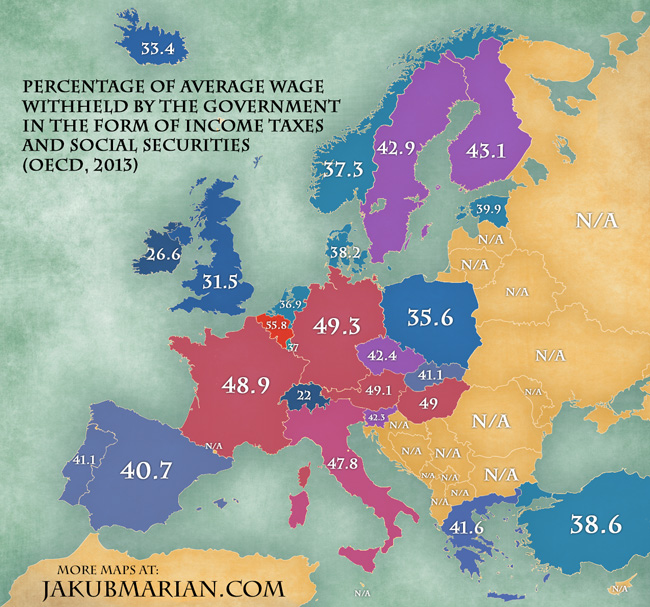
The unfortunate truth. This is how fucked you are when you've had 26 years of socialists in federal government.

Image
GoranZ
Posts: 2927
Joined: Sat Aug 22, 2009 3:14 pm

Re: Socialism's core values

Post by GoranZ »

waauw wrote:The unfortunate truth. This is how fucked you are when you've had 26 years of socialists in federal government.

Image
Having socialist party ruling in one country doesn't mean they have socialism... So you guys didn't had it. What you had is not even remotely close to socialism.
Even a little kid knows whats the name of my country... http://youtu.be/XFxjy7f9RpY

Interested in clans? Check out the Fallen!
waauw
Posts: 4756
Joined: Fri Mar 13, 2009 1:46 pm

Re: Socialism's core values

Post by waauw »

GoranZ wrote:
waauw wrote:The unfortunate truth. This is how fucked you are when you've had 26 years of socialists in federal government.

Image
Having socialist party ruling in one country doesn't mean they have socialism... So you guys didn't had it. What you had is not even remotely close to socialism.
Luckily so, even more socialist influence and we would've been even more bankrupt than we already are. The only thing keeping the country standing is the right-wing minded north.
User avatar
Lootifer
Posts: 1084
Joined: Mon Feb 16, 2009 7:30 pm
Location: Competing

Re: Socialism's core values

Post by Lootifer »

mrswdk wrote:If you go anywhere in China these days, you're sure to see a few posters and advertising screens promoting the 'core values of socialism':

Prosperity
Freedom
Equality
Civility
Harmony
Democracy
Rule of Law
Industriousness
Justice
Patriotism
Integrity
Friendliness

What are the core values of your societies?
Getting back on track. Ill see if I can find what our government focusses on...

Wait that's right, we don't waste money navel-gazing and running ridiculous campaigns that are nothing short of idiot propaganda...

Our society's core values are, oddly, decided by our society (as in the individuals that make up said society). Weird huh?

Personally I focus only on anti-corruption and equality of opportunity. Everything else is just poorly thought out rhetoric.
I go to the gym to justify my mockery of fat people.
mrswdk
Posts: 14898
Joined: Sun Sep 08, 2013 10:37 am
Location: Red Swastika School

Re: Socialism's core values

Post by mrswdk »

Lootifer wrote:Getting back on track. Ill see if I can find what our government focusses on...

Wait that's right, we don't waste money navel-gazing and running ridiculous campaigns that are nothing short of idiot propaganda...
Given that Anzac Day was marked all over New Zealand just 3 days ago, I'm surprised you feel able to make statements like the above with a straight face.
Our society's core values are, oddly, decided by our society (as in the individuals that make up said society). Weird huh?
I never said that wasn't a possibility.

In any case, it's a shame that your government is so unrepresentative of your people that you are able to make such a clear distinction between what the people decide and what the government decides.
Post Reply

Return to “Acceptable Content”