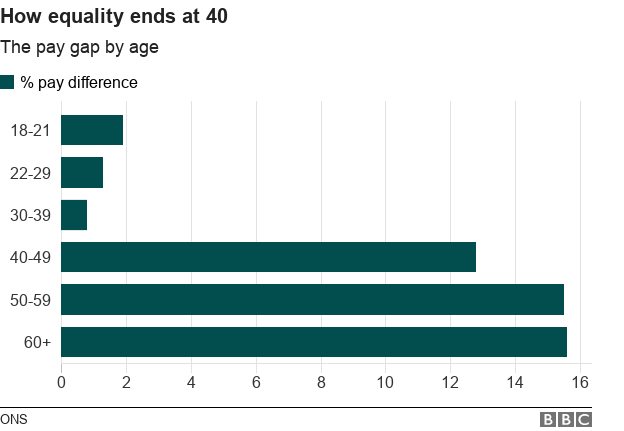
When will old people be more fair and less prejudiced, like young people?


Moderator: Community Team
My first reaction is that the 18-21 bar is too high and needs to be addressed.mrswdk wrote:New analysis by the UK's Office for National Statistics demonstrates that young people pay each other fairly, while old people pay each other in a discriminatory and predatory way:
When will old people be more fair and less prejudiced, like young people?

According to mrswdk, 18-21 year olds all work for other 18-21 year olds. And 90 year olds all work for other 90 year olds.mrswdk wrote:New analysis by the UK's Office for National Statistics demonstrates that young people pay each other fairly, while old people pay each other in a discriminatory and predatory way:
When will old people be more fair and less prejudiced, like young people?

Pack Rat wrote:if it quacks like a duck and walk like a duck, it's still fascism
https://www.conquerclub.com/forum/viewt ... 0#p5349880
But why does the wage gap get considerably larger with people in their 50's and 60's, when most people are done with raising their own children? It's smallest with people in their 30's, which (in my experience) is prime child-rearing age. That is when you'd expect to see an increase in the gender pay gap, not after the kids are (broadly speaking) growed up. The average age a woman has their first kid is age 26. Unless we have women taking time off from work to care for 30 year old children, I don't see how that checks out.tzor wrote:My first reaction is that the 18-21 bar is too high and needs to be addressed.mrswdk wrote:New analysis by the UK's Office for National Statistics demonstrates that young people pay each other fairly, while old people pay each other in a discriminatory and predatory way:
When will old people be more fair and less prejudiced, like young people?
As you get to the later years there is a good reason for the discrepancy which is the question of "continual service." Many women often take breaks in their employment history due to various conditions associated with a family and as a result loose out on "seniority" benefits. That's a little more complex to handle. You want to give someone a little extra to stay another so many years (think of it as a "resigning bonus") but that means a person in position X who has been with the company all his life is being paid more than a person who just started the company but working in the same position.
Apart from a communist takeover of the galaxy it's going to be hard to fix this problem overnight. Cutting the wages of those whose salaries have been increased by longevity is only going to cause people to leave (but if you are doing a "redundancy" plan this is the way to go). Raising the salaries of the ones with less longevity is costly and could also lead to resentment. The best solution is to adopt a neutral policy and allow the exceptions to filter out naturally through the system.
Mr_Adams wrote:You, sir, are an idiot.
Timminz wrote:By that logic, you eat babies.
HitRed wrote:
The same chart also shows drinks per day.


Or you could just tackle the issue that pushes women out of the workplace in the first place, which is sexist laws and company policies that give generous parental leave entitlements to women and little/nothing to men, putting the onus on women to be the ones who take career breaks to look after children.tzor wrote:Many women often take breaks in their employment history due to various conditions associated with a family and as a result loose out on "seniority" benefits. That's a little more complex to handle. You want to give someone a little extra to stay another so many years (think of it as a "resigning bonus") but that means a person in position X who has been with the company all his life is being paid more than a person who just started the company but working in the same position.