

The Great War
Moderator: Community Team
Forum rules
Please read the Community Guidelines before posting.
Please read the Community Guidelines before posting.

Re: The Great War
A new freemium-friendly tournament:
the brutalization of belgium
freemium-friendly
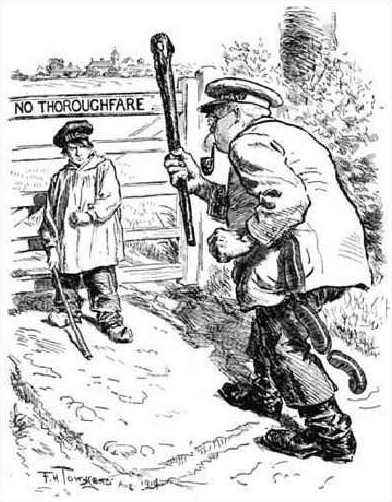
Generally known as the The Rape of Belgium. The term "The Rape of Belgium" is used both in a broad sense to describe the brutal treatment of Belgian citizens under the German occupation of 1914-1918, and in a narrow sense to describe some specific war crimes during the first couple months of the war, in places like Dinant and Leuven.
In this tourney, we will use both 1v1 and Terminator games to represent the slaughter of civilians. Freemiums are welcome, but must reserve a game slot and keep it reserved throughout the tournament.
There was a tremendous amount of misinformation and confusion on both sides, so all games in this tourney will use Fog of War. All games will have a 20-round limit to ensure we keep moving along.
-----------------------------------------------------------------------------------------------------------------------
One 6-player Terminator game on the Luxembourg map. Flat rate spoils, fog and trench.
-----------------------------------------------------------------------------------------------------------------------
Each represented by a 1v1 game with Escalating spoils, no trench. Aarschot, an old city dating to Roman times, will be represented by the Conquer Rome map. Andenne, a town which according to legend was founded by Charles Martel, will be represented by the Middle Ages map. Tamine, one of the seven towns comprising Sambreville, will be represented by High Seas (the seven seas representing the seven towns.)
-----------------------------------------------------------------------------------------------------------------------
One 5-player Escalating Terminator game on the Castle Lands map.
-----------------------------------------------------------------------------------------------------------------------
One 7-player manual-deployment game on the Netherlands map.
-----------------------------------------------------------------------------------------------------------------------
One 1v1 game on the CCU map. No Spoils, trench.
-----------------------------------------------------------------------------------------------------------------------
One 5-player Terminator map on the Battle For Iraq! map. Nuclear, no trench.
-----------------------------------------------------------------------------------------------------------------------
One 6-player Terminator game on the British Islands map. Escalating, Trench.
THERE ARE NO SCORE RESETS IN THIS TOURNAMENT. ALL WINS COUNT TOWARD THE FINAL RESULT.
Generally known as the The Rape of Belgium. The term "The Rape of Belgium" is used both in a broad sense to describe the brutal treatment of Belgian citizens under the German occupation of 1914-1918, and in a narrow sense to describe some specific war crimes during the first couple months of the war, in places like Dinant and Leuven.
In this tourney, we will use both 1v1 and Terminator games to represent the slaughter of civilians. Freemiums are welcome, but must reserve a game slot and keep it reserved throughout the tournament.
There was a tremendous amount of misinformation and confusion on both sides, so all games in this tourney will use Fog of War. All games will have a 20-round limit to ensure we keep moving along.
-----------------------------------------------------------------------------------------------------------------------
- Phase 1: The Germans General Staff was highly concerned -- probably too highly concerned -- about irregular pro-French guerrillas arising in the occupied territories. French irregulars like the "francs-tireurs" had arisen in the east of France as far back as the Luxembourg crisis of 1867. http://en.wikipedia.org/wiki/Francs-tir ... ussian_War
One 6-player Terminator game on the Luxembourg map. Flat rate spoils, fog and trench.
-----------------------------------------------------------------------------------------------------------------------
- Phase 2,3, and 4: Massacres of citizens took place in Aarschot (156 dead), Andenne (211 dead) and Tamines (383 dead).
Each represented by a 1v1 game with Escalating spoils, no trench. Aarschot, an old city dating to Roman times, will be represented by the Conquer Rome map. Andenne, a town which according to legend was founded by Charles Martel, will be represented by the Middle Ages map. Tamine, one of the seven towns comprising Sambreville, will be represented by High Seas (the seven seas representing the seven towns.)
-----------------------------------------------------------------------------------------------------------------------
- Phase 3: Dinant. Dinant is a stunningly beautiful little town of medieval origin.
It is hard to imagine this stunning postcard-perfect view being the scene of a heinous war crime. http://www.firstworldwar.com/battles/dinant.htm
- Click image to enlarge.

[/i]Although the town fell to von Hausen's troops on 23 August the occupation was not initially peaceful. German soldiers who were repairing the town bridge were allegedly fired upon by local inhabitants. In retaliation therefore the German authorities rounded up 612 men, women and children and shot them together; the youngest victim was a three-week-old baby.
One 5-player Escalating Terminator game on the Castle Lands map.
-----------------------------------------------------------------------------------------------------------------------
- Phase 6: The above atrocities occurred mainly in Walloon (French-speaking) Belgium. The next (and far largest) took place in Leuven, part of Flemish (Dutch-speaking) Belgium. http://www.firstworldwar.com/battles/louvain.htmOccupied therefore by the Germans the city was relatively peaceful for six days until 25 August. On that date German units to the rear of the city were attacked by an initially successful Belgian force advancing from Antwerp.
Panicked, those German troops under fire withdrew to Louvain, which in itself caused confusion to German soldiers stationed in the city. Shots were heard amid fearful cries that the Allies were launching a major attack.
Once it became clear however that no such Allied attack was underway or even imminent, the city's German authorities determined to exact revenge upon Louvain's citizenry, whom they were convinced that contrived the confusion that day.
The German form of retaliation was savage. For five consecutive days the city was burnt and looted. Its library of ancient manuscripts was burnt and destroyed, as was Louvain's university (along with many other public buildings). The church of St. Pierre was similarly badly damaged by fire. Citizenry of Louvain were subject to mass shootings, regardless of age or gender.
One 7-player manual-deployment game on the Netherlands map.
-----------------------------------------------------------------------------------------------------------------------
- Phase 7: The town's Catholic University was sacked, and thousands of priceless manuscripts perished in a library fire.
One 1v1 game on the CCU map. No Spoils, trench.
-----------------------------------------------------------------------------------------------------------------------
- Phase 8: Despite world outrage, the Germans remained unrepentant. http://www.firstworldwar.com/source/lou ... tement.htmLouvain - Official Statement by the German Minister of State, Addressed to the United States Government by Gottlieb von Jagow
Long ago the Belgian Government had organized an insurrection of the people against the invasion of the enemy. Some stores of arms had been established, and upon each gun was the name of the citizen who was to use it.
Since the Hague Conference it has been recognized, at the request of the little powers, that an insurrection of the people is in conformity with international law, if weapons are carried openly and the laws of war respected.
Such an insurrection, however, could be organized only to combat an enemy who invaded the country. At Louvain, on the other hand, the city had already surrendered and the population had then abandoned all resistance. The city was occupied by German troops.
Nevertheless the population attacked from all sides the German garrison and the troops who were in the act of entering the city, by opening upon them a murderous fire. Because the attitude of the population was obviously pacific these troops arrived at Louvain by railroad and autos.
In the present case, then, there is no question of a measure of defence in conformity with international law, nor an admissible ruse of war; but it was a traitorous attack on the part of the civilian population.
This attack is the more unjustifiable because it has been proved that it had been planned long before and was to have taken place at the same time as the sortie from Antwerp. The weapons were not carried openly. Some women and young girls took part in the combat, and gouged out the eyes of the wounded.
The barbarous acts of the Belgian people in almost all the territories occupied by the German troops have not only justified the most severe reprisals on the part of the German military authorities but have even compelled the latter to order them for safeguarding the troops.
The intensity of the resistance of the population is proved by the fact that it took our troops twenty-four hours to overcome the attacks by the inhabitants of Louvain.
In the course of these combats the city of Louvain has been destroyed in large part by a conflagration which broke out after the explosion of a convoy of benzine, and this explosion was occasioned by shots fired during the battle.
The Imperial Government is the first to deplore this unfortunate result, which was in no way intentional. Nevertheless, because of the acts of the francs-tireurs, it was impossible to avoid such an outcome.
Moreover, any one who knows the conciliatory character of the German soldier could not seriously assert that he has been led to act in such a manner without serious provocation.
Under these circumstances the Belgian people, who respect neither right nor law, bear all the responsibility, in conjunction with the Belgian Government, which, with a criminal nonchalance, has given to the people orders contrary to international law by inciting them to resistance, and which, in spite of reiterated warnings by the German authorities, did nothing, after the capture of Liege, to induce the people to take a pacific attitude.
This kind of attitude seems to have endured throughout the 20th century and into the 21st. Consider the war in Iraq for obvious examples.
One 5-player Terminator map on the Battle For Iraq! map. Nuclear, no trench.
-----------------------------------------------------------------------------------------------------------------------
- Phase 9: Outrage over the war crimes in Belgium backfired on Germany. It was one of the main issues that transformed Britain from a reluctant to an enthusiastic participant in the War. The thousands of dead Belgian citizens became hundreds of thousands of live British lads lining up at the recruitment offices.
One 6-player Terminator game on the British Islands map. Escalating, Trench.
THERE ARE NO SCORE RESETS IN THIS TOURNAMENT. ALL WINS COUNT TOWARD THE FINAL RESULT.
“Life is a shipwreck, but we must not forget to sing in the lifeboats.”
― Voltaire
― Voltaire
-
iAmCaffeine

- Posts: 11699
- Joined: Mon Apr 01, 2013 5:38 pm


Re: The Great War
dean00
I wish either my father or my mother, or indeed both of them as they were in duty both equally bound to it, had minded what they were about when....
If 2 player fog game,please allow 12 hour snap courtesy, or post what I could have seen.... Thank you
If 2 player fog game,please allow 12 hour snap courtesy, or post what I could have seen.... Thank you
Re: The Great War
The first great French victory
Marne
http://www.carto1418.fr/anim-marne-mini.php
-----------------------------------------------------------------------------------------------------------------------
Six 6-player Terminator games will be played. The use of Fog will help enhance the complexity of your decision-making, as it did in real life, and the use of Escalating spoils and Unlimited reinforcements will model the need to be bold and aggressive in seeking the enemy.
-----------------------------------------------------------------------------------------------------------------------
You will play in five 8-player Standard games, nuclear foggy no trench. In keeping with the motor-car theme, they will all be on the Conquer 500 map.
-----------------------------------------------------------------------------------------------------------------------
Three 7-player Standard games on the Steamworks map. These games will by Sunny, to represent the effectiveness of reconnaissance, with all other settings to be randomized.
-----------------------------------------------------------------------------------------------------------------------
Five 6-player Standard games on the Gilgamesh map, default CC settings except for some random patches of Fog.
-----------------------------------------------------------------------------------------------------------------------
Four 8-player flat rate foggy trench Terminator games on the France 2.1 map will represent the resilience of the defense in this phase.
Tournament Phase 6: There were some German successes, at Revigny and at St. Mihiel, but they were short-lived.
Four 6-player escalating sunny no trench Terminator games on the Europa map.
-----------------------------------------------------------------------------------------------------------------------
Seven 8-player games on the 8 Thoughts map, Foggy Escalating, with randomized reinforcements and randomized trench.
sempaispellcheck wrote:La première bataille de la Marne, souvent identifiée comme « la bataille de la Marne » a eu lieu du 5 septembre 1914 au 12 septembre 1914 entre d'une part l'armée allemande et d'autre part l'armée française et le corps expéditionnaire britannique. Cette bataille doit être distinguée de la seconde bataille de la Marne, qui se déroula en juillet 1918 .
Au cours de cette bataille décisive, les troupes franco-britanniques arrêtent puis repoussent les Allemands, mettant ainsi en échec le plan Schlieffen qui prévoyait l'invasion rapide de la France en passant par la Belgique.
Les combats se déroulèrent le long d'un arc-de-cercle de 225 kilomètres à travers la Brie, la Champagne et l'Argonne, limités à l'ouest par le camp retranché de Paris et à l'est par la place fortifiée de Verdun. Ce champ de bataille est subdivisé en plusieurs batailles plus restreintes : à l'ouest les batailles de l'Ourcq et des deux Morins, au centre les batailles des marais de Saint-Gond et de Vitry, et à l'est la bataille de Revigny.
Les armées allemandes faillissent plusieurs fois casser les lignes des armées alliées, et enfin, les armées alliées gagnent l'occasion d'exploiter un trou entre les deux armées principales allemandes et de forcer les allemands à faire un repli en s'installant sur les rives de l'Aisne. Mais, alors que les armées franco-britanniques mirent alors un terme à l'avancée irrésistible des armées allemandes commandées par Moltke, elles ne purent ou ne surent exploiter cet avantage en repoussant ces armées hors du territoire français - les troupes françaises sont trop épuisées et affaiblies pour se lancer dans une poursuite.
sempai
sempaispellcheck wrote:The World War I battle commonly known as the Battle of the Marne, which was fought at the beginning of the war in early September 1914, was actually the first of two Battles of the Marne - the second was fought at the end of the war in July 1918.
The first Battle of the Marne was an attempt by a coalition of French and British forces to stop the "Schlieffen Plan" - a German attempt to invade France from the north by way of Belgium - and was actually composed of five concurrent battles waged along an arc of French territory 225 kilometers (140 miles) long - east of Paris, west of Verdun, and spanning the French regions of Brie, Champagne, and the Argonne.
Across this area, over the span of a week, five battles were fought:
the Battle of the Ourcq, the Battle of the Two Morins, the Battle of the Marshes of Saint Gond, the Battle of Vitry, and the Battle of Revigny.
The Germans came close to breaking through Allied lines several times during the week, but the Allies were able to exploit a gap between the two main German forces, and the Germans were eventually forced to retreat to the banks of the Aisne river. The Franco-British troops, however, were too weakened and exhausted to pursue their adversaries and force them out of France entirely
- Click image to enlarge.
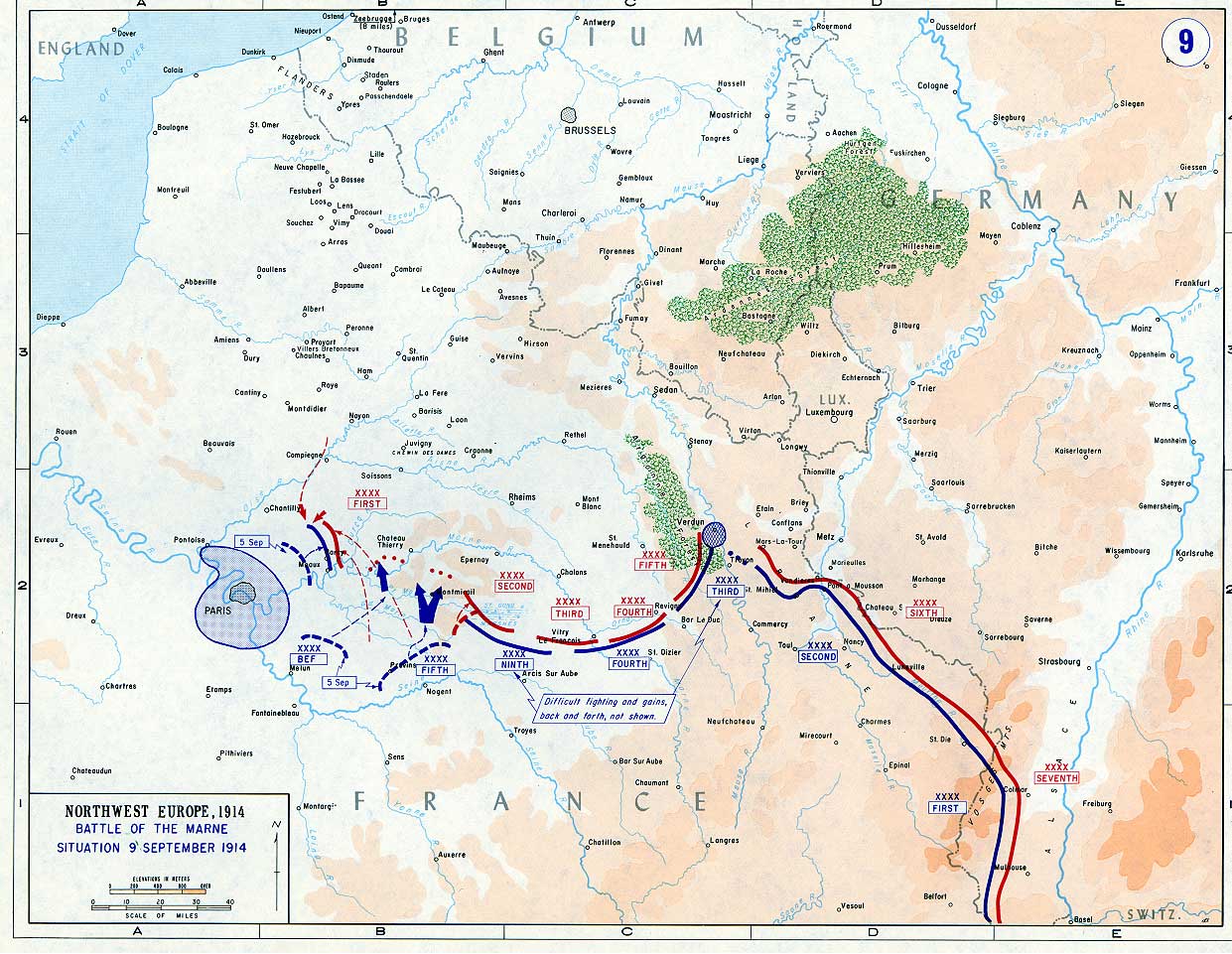
- Phase 1: With the collapse of Plan XVII, the German expectation was that the French would be on the verge of collapse. Marechal Joffre, however, had been busy reorganising the French Army. Quite possibly one of the most underrated and under-appreciated generals of all time, Joffre kept a cool head in the midst of disaster, and by the time German troop neared Paris he had moved sufficient reserves from east and west to the centre that for the first time the Allies had numerical superiority in a region.
Under the Schlieffen Plan, the Germans intended to take Paris if it was weakly held. If Paris was defended in strength, however, the plan was to bypass it to the east and crush the French army in a great pincer movement toward the Swiss frontier.
Paris was defended by General Manoury's Sixth Army, plus substantial garrison troops and artillery commanded by General Gallieni. Observing the German detour to the east, Gallieni concluded
On September 5th the Sixth Army, supplemented by most of the field-mobile elements of Gallieni's garrison hurled itself across the Ourcq River. Von Kluck's First German Army had its communications cut, several artillery batteries captured, and had to withdraw in some disarray."If they do not come to us, we will go to them with all the force we can muster."
Six 6-player Terminator games will be played. The use of Fog will help enhance the complexity of your decision-making, as it did in real life, and the use of Escalating spoils and Unlimited reinforcements will model the need to be bold and aggressive in seeking the enemy.
-----------------------------------------------------------------------------------------------------------------------
- wikipedia wrote:The Germans still hoped to achieve a breakthrough against the Sixth Army between 6 and 8 September. The Sixth Army was reinforced on 7 September, by 10,000 French reserve infantry ferried from Paris, including about 6,000 men from the Seventh Infantry division who were transported in a fleet of Paris taxicabs requisitioned by General Joseph Gallieni, military governor of Paris.[13][14]
Between six hundred and a thousand taxicabs and drivers were assembled on the evening of 6 September on the esplanade of Les Invalides. They were mostly the Renault AG1 Landaulet model, with an average speed of 25 kilometres per hour (16 mph). Within twenty-four hours, they transported the battalions Villemonble and Gagny, about six thousand soldiers and officers, 50 kilometres (31 mi) to the front at Nanteuil-le-Haudouin. Each taxi carried five soldiers, four in the back and one next to the driver. Only the back lights of the taxis were lit; the drivers were instructed to follow the lights of the taxi ahead. Most of the taxis were demobilized on September 8 but some remained longer to carry the wounded and refugees. The taxis, following city regulations, dutifully ran their meters. The French treasury reimbursed the total fare of 70,012 francs.[15]
The use of taxis to ferry the troops to the front represented the first instance of large-scale motor transport of infantry.

You will play in five 8-player Standard games, nuclear foggy no trench. In keeping with the motor-car theme, they will all be on the Conquer 500 map.
-----------------------------------------------------------------------------------------------------------------------
- One of the most important elements underlying the Allies success was the extensive use of aerial reconnaissance and the ubiquitous French balloons.
Three 7-player Standard games on the Steamworks map. These games will by Sunny, to represent the effectiveness of reconnaissance, with all other settings to be randomized.
-----------------------------------------------------------------------------------------------------------------------
- Phase 4: With von Kluck off balance, Joffre was anxious to quickly exploit the gap in the German lines. He persuaded the British to attack despite their misgivings, supported by the First French Army. The BEF attacked in the region known as the Two Morins, after two small rivers known as the Petite Morin and the Grand Morin. This attack broadened the gap between the 1st and 2nd German Armies. The right flank of the 2nd Army begins to give way.
The way that the two Morins tended to bottleneck movement in their area suggests ancient battles in the region of the Tigris and Eupharates. Although separated from the Marne by 5000 years, the Gilgamesh map will do well to illustrate the problems in this zone of the the battle.
Five 6-player Standard games on the Gilgamesh map, default CC settings except for some random patches of Fog.
-----------------------------------------------------------------------------------------------------------------------
- Phase 5 and 6: The battles in the centre and the east were slightly less significant than the battles on the western flank, but they were every bit as fierce. Ferocious battles raged in the marshes of Saint-Gond and the village of Sézanne. General (future Marshal) Foch began his rise to fame at Saint-Gond. Further east, Revigny was captured, while back-and-forth fighting raged around Vitry-le-Francois. At the extreme eastern end of the line, the Germans broke through at St. Mihiel, and the General Castelnau prepared to retreat. He was ordered to hold another 24 hours at all costs, and sure enough before the end of the 24-hour period the German reserves in his area had been withdrawn to the west, saving his position.
Four 8-player flat rate foggy trench Terminator games on the France 2.1 map will represent the resilience of the defense in this phase.
Tournament Phase 6: There were some German successes, at Revigny and at St. Mihiel, but they were short-lived.
Four 6-player escalating sunny no trench Terminator games on the Europa map.
-----------------------------------------------------------------------------------------------------------------------
- Less than three months after the shootings in Sarajevo, the Central Powers' great offensive was grinding to a halt. France had survived the German onslaught, the Schlieffen Plan lay in tatters, and the German Chief of the General Staff, Helmuth von Moltke, was utterly despondent.
For three days after the Battle of the Marne, von Moltke was paralysed with self-doubt, and junior officers took over running his command. Eventually the Kaiser replaced him with von Falkenhayn, citing Moltke's ill health. The degree of Moltke's nervous breakdown has always been debated. Different authors have pegged it as anything from minor indecisiveness to complete catatonia, and everything in between.

History has painted Moltke very unkindly, as the man who took the brilliant Schlieffen Plan and made a mess of it. How true this is remains uncertain. The Schlieffen Plan was written in 1905. In 1905 Russia was getting her ass kicked by Japan and was at its lowest point in 300 years. In 1905, relations between England and Germany were extremely cordial and England was expected to remain neutral in the war. Between 1905 and 1914, Russia pulled itself out of its slump and became vastly more dangerous, while relations between Germany and Britain soured badly. The infallibility of the Schlieffen Plan was largely a myth painted by Nazi revisionists 30 years later. The fact that it continues to be repeated as fact is evidence of the incredible staying power of popular myths.
Still, if the Schlieffen Plan did have a chance of succeeding, Moltke's changes certainly doomed it. He pulled much strength from the all-important right wing of his invading army to reinforce Alsace and Lorraine. The Schlieffen Plan anticipated allowing the French Army to rush forward deep into Lorraine and strand itself far from Paris. By beefing up the defenses of Lorraine, Moltke ensured that French reinforcements like the 3rd and 4th Armees would be available at the Marne.
Whatever Moltke's faults were, self-delusion was not one of them. Having lost the Battle of the Marne, he understood that Germany now faced a war which, regardless of how it ended, would be long and gruesome. His role in bringing it to be was too much for him to bear.
Seven 8-player games on the 8 Thoughts map, Foggy Escalating, with randomized reinforcements and randomized trench.
“Life is a shipwreck, but we must not forget to sing in the lifeboats.”
― Voltaire
― Voltaire
-
Donelladan
- Posts: 3692
- Joined: Tue Mar 03, 2009 8:48 am
Re: The Great War
I saw that on the tournament The Brutalization of Belgium, one of the round will include escalating AND trench at the same time
Just wondering, as the bug with extra high amount of troops been fixed ? Or are we gonna play an unplayable game if it last long?
Just wondering, as the bug with extra high amount of troops been fixed ? Or are we gonna play an unplayable game if it last long?

Re: The Great War
It has a 20-round limit to make sure that doesn't happen.Donelladan wrote:I saw that on the tournament The Brutalization of Belgium, one of the round will include escalating AND trench at the same time
Just wondering, as the bug with extra high amount of troops been fixed ? Or are we gonna play an unplayable game if it last long?
“Life is a shipwreck, but we must not forget to sing in the lifeboats.”
― Voltaire
― Voltaire

Re: The Great War
This might prove interesting to tourney folk.
http://thefirstworldwarin261weeks.com/
The First World War in 261 weeks is originally a Dutch podcast by Tom Tacken (http://www.veertienachttien.nl), translated by Peter Veltman.
Every week of the war a new character, introduced by the main events of that particular week. The series will run from 28 June 2014 (shooting at Sarajevo) till 28 June 2019 (Treaty of Versailles).
RSS-feed Podbean for your podcatcher: http://thefirstworldwarin261weeks.podbean.com/feed/
Available in iTunes and Stitcher (thanks for reviewing).
http://thefirstworldwarin261weeks.com/
Rule 1
Spoiler
"1. Communication. The team that communicates well is successful. Whether you use in-game chat, live chat, PMs, IMs, Skype, or what have you, every team member needs to know the game plan. Whatever works."
Re: The Great War
Thanks, Fewnix!Fewnix wrote:This might prove interesting to tourney folk.
The First World War in 261 weeks is originally a Dutch podcast by Tom Tacken (http://www.veertienachttien.nl), translated by Peter Veltman.
Every week of the war a new character, introduced by the main events of that particular week. The series will run from 28 June 2014 (shooting at Sarajevo) till 28 June 2019 (Treaty of Versailles).
RSS-feed Podbean for your podcatcher: http://thefirstworldwarin261weeks.podbean.com/feed/
Available in iTunes and Stitcher (thanks for reviewing).
http://thefirstworldwarin261weeks.com/
“Life is a shipwreck, but we must not forget to sing in the lifeboats.”
― Voltaire
― Voltaire
-
denominator
- Posts: 1796
- Joined: Thu May 24, 2007 9:41 am
- Gender: Male
- Location: Fort St John
Re: The Great War
Agreed, that is awesome. I was just looking for a new podcast, and this one fits the bill. Thanks!Dukasaur wrote:Thanks, Fewnix!Fewnix wrote:This might prove interesting to tourney folk.
The First World War in 261 weeks is originally a Dutch podcast by Tom Tacken (http://www.veertienachttien.nl), translated by Peter Veltman.
Every week of the war a new character, introduced by the main events of that particular week. The series will run from 28 June 2014 (shooting at Sarajevo) till 28 June 2019 (Treaty of Versailles).
RSS-feed Podbean for your podcatcher: http://thefirstworldwarin261weeks.podbean.com/feed/
Available in iTunes and Stitcher (thanks for reviewing).
http://thefirstworldwarin261weeks.com/

Re: The Great War
congratulations to Blinkiddyblink; 3 great war stars
I wish either my father or my mother, or indeed both of them as they were in duty both equally bound to it, had minded what they were about when....
If 2 player fog game,please allow 12 hour snap courtesy, or post what I could have seen.... Thank you
If 2 player fog game,please allow 12 hour snap courtesy, or post what I could have seen.... Thank you
Re: The Great War
Agreed.t4mcr53s2 wrote:congratulations to Blinkiddyblink; 3 great war stars
And with that, the second round of the Great War Guessing Game has been won by SilverWill.
http://www.conquerclub.com/forum/viewto ... 5#p4600136
“Life is a shipwreck, but we must not forget to sing in the lifeboats.”
― Voltaire
― Voltaire
Re: The Great War
Today we launch The Defense of the Realm Act. This is based not on a battle but on domestic political developments in the U.K.
The Defense of the Realm Act costs 5 tokens to enter.
For those who have been paying attention, we have in the last few weeks been re-aligning the "pricing" of the Great War tourneys.
In the beginning, we naturally put a higher entry fee on larger, more complex tourneys. This, however, is actually somewhat unfair. It means that people signing up for smaller tourneys have an easier path to victory and pay less for the privilege, while those joining the bigger tourneys face a double jeopardy of a more difficult win and a higher entry fee.
In the last couple weeks, we have realigned this, so that there is a higher entry fee for simple tournaments and a lesser fee for the more complex ones. While it may seem counter-intuitive at first, I think that on reflection you will agree with me that this is actually a more equitable system.
The Defense of the Realm Act is the smallest and simplest tournament in the entire Great War series thus far. With everyone trying to reduce their game load for Christmas, I'm thinking this might be the right time for a little easy one. We have accordingly pegged the cost to enter at 5 tokens.
One little feature that comes with this new policy is that the winner gets his tokens back, and some of the runners-up get some of their tokens back.
the defense of the realm act 1500 dec 17 to 1500 dec 24
The Defense of the Realm Act
The Defense of the Realm Act was passed in 1914, giving the British government extraordinary powers to control various activites that were seen as potentially impacting to the war effort. Authoritarian measures under the Act included censorship of the press and even private mail, the power to requisition lands and building for military needs, prohibitions on public bonfires (which it was felt could be beacons for Zeppelin raids) and curtailing "wasteful" activities such as drinking.
Starting with a single paragraph in 1914, DORA grew throughout the war, and by 1918 was a Byzantine maze of rules and regulations.
Anti-war activists protesting the act went to jail in many cases. The first was John MacLean, the Red Clydeside activist. Many others followed. Socialists and anti-war activists were the most common DORA resistors, but civil libertarians of all political persuasions felt the act was despotic and largely a needless invasion of rights.
The situation is hardly unique. The debate about whether the needs of war justify suppression of liberty has gone on since ancient Athens and it continues unabated today.
-----------------------------------------------------------------------------------------------------------------------
One 1v1 game, British Isles, default CC settings
-----------------------------------------------------------------------------------------------------------------------
One Polymorphic Dubs game, Madness, default except zombie spoils and fog
-----------------------------------------------------------------------------------------------------------------------
One Polymorphic Trips game, Supermax Prison Riot, nuclear spoils, parachute reinforcements, fog and trench
-----------------------------------------------------------------------------------------------------------------------
One Polymorphic Quads game, Orient Express, flat rate, adjacent and foggy.
-----------------------------------------------------------------------------------------------------------------------
The Defense of the Realm Act was passed in 1914, giving the British government extraordinary powers to control various activites that were seen as potentially impacting to the war effort. Authoritarian measures under the Act included censorship of the press and even private mail, the power to requisition lands and building for military needs, prohibitions on public bonfires (which it was felt could be beacons for Zeppelin raids) and curtailing "wasteful" activities such as drinking.
Starting with a single paragraph in 1914, DORA grew throughout the war, and by 1918 was a Byzantine maze of rules and regulations.
Anti-war activists protesting the act went to jail in many cases. The first was John MacLean, the Red Clydeside activist. Many others followed. Socialists and anti-war activists were the most common DORA resistors, but civil libertarians of all political persuasions felt the act was despotic and largely a needless invasion of rights.
The situation is hardly unique. The debate about whether the needs of war justify suppression of liberty has gone on since ancient Athens and it continues unabated today.
-----------------------------------------------------------------------------------------------------------------------
- Phase 1: wikipedia wrote:The Defence of the Realm Act (DORA) was passed in the United Kingdom on 8 August 1914, four days after it entered World War I. It gave the government wide-ranging powers during the war period, such as the power to requisition buildings or land needed for the war effort, or to make regulations creating criminal offences.
DORA ushered in a variety of authoritarian social control mechanisms, such as censorship:
"No person shall by word of mouth or in writing spread reports likely to cause disaffection or alarm among any of His Majesty's forces or among the civilian population"[1]
One 1v1 game, British Isles, default CC settings
-----------------------------------------------------------------------------------------------------------------------
- wikipedia wrote:The trivial peacetime activities no longer permitted included flying kites, starting bonfires, buying binoculars, feeding wild animals bread, discussing naval and military matters or buying alcohol on public transport. Alcoholic beverages were watered down and pub opening times were restricted to noon–3pm and 6:30pm–9:30pm (the requirement for an afternoon gap in permitted hours lasted in England until the Licensing Act 1988 was brought into force).
One Polymorphic Dubs game, Madness, default except zombie spoils and fog
-----------------------------------------------------------------------------------------------------------------------
- Phase 3: Numerous activists went to jail for opposing DORA. For the most part they were anti-war activists opposing (obviously) the war and socialists opposing the government in general. However, civil libertarians of all political persuasions, left, right, and centre, felt that DORA was a draconian usurpation of power. The powers given to the military were somewhat circumscribed in 1915 amendments. However,
http://newpol.org/content/traitors-spie ... orld-war-iThe regulations issued by fiat to enforce the Defence of the Realm Act proved to be as dangerous threat to civil liberties as the Act itself. Indeed, even after the 1915 legislation limiting the jurisdiction of military tribunals, the military still exercised tremendous power over civilians. The regulations permitted military commanders to ban anyone from a specified area, forcing the individual to move to another part of the United Kingdom. Another regulation authorized the military to raid any house or office to search for printed material that could "cause disaffection" from the war effort. Printing presses seized by the military during a raid could be destroyed to ensure that they were not used to produce seditious literature.
One Polymorphic Trips game, Supermax Prison Riot, nuclear spoils, parachute reinforcements, fog and trench
-----------------------------------------------------------------------------------------------------------------------
- Phase 4: The argument about whether the needs of war justify suppression of liberty has gone on since ancient Athens and it continues unabated today. World War I has been portrayed as a war between the (mostly authoritarian) Central Powers and the (mostly liberal and democratic) Allies. And yet, the liberal democracies for the most part abandoned their ideals with the outbreak of war and one after another adopted dictatorial powers to prosecute the war. In that sense, while the Allies eventually prevailed on the battlefield, they lost the very thing they originally set out to defend.
One Polymorphic Quads game, Orient Express, flat rate, adjacent and foggy.
-----------------------------------------------------------------------------------------------------------------------
For those who have been paying attention, we have in the last few weeks been re-aligning the "pricing" of the Great War tourneys.
In the beginning, we naturally put a higher entry fee on larger, more complex tourneys. This, however, is actually somewhat unfair. It means that people signing up for smaller tourneys have an easier path to victory and pay less for the privilege, while those joining the bigger tourneys face a double jeopardy of a more difficult win and a higher entry fee.
In the last couple weeks, we have realigned this, so that there is a higher entry fee for simple tournaments and a lesser fee for the more complex ones. While it may seem counter-intuitive at first, I think that on reflection you will agree with me that this is actually a more equitable system.
The Defense of the Realm Act is the smallest and simplest tournament in the entire Great War series thus far. With everyone trying to reduce their game load for Christmas, I'm thinking this might be the right time for a little easy one. We have accordingly pegged the cost to enter at 5 tokens.
One little feature that comes with this new policy is that the winner gets his tokens back, and some of the runners-up get some of their tokens back.
“Life is a shipwreck, but we must not forget to sing in the lifeboats.”
― Voltaire
― Voltaire
-
denominator
- Posts: 1796
- Joined: Thu May 24, 2007 9:41 am
- Gender: Male
- Location: Fort St John
Re: The Great War
Great adjustment.Dukasaur wrote:The Defense of the Realm Act costs 5 tokens to enter.
For those who have been paying attention, we have in the last few weeks been re-aligning the "pricing" of the Great War tourneys.
In the beginning, we naturally put a higher entry fee on larger, more complex tourneys. This, however, is actually somewhat unfair. It means that people signing up for smaller tourneys have an easier path to victory and pay less for the privilege, while those joining the bigger tourneys face a double jeopardy of a more difficult win and a higher entry fee.
In the last couple weeks, we have realigned this, so that there is a higher entry fee for simple tournaments and a lesser fee for the more complex ones. While it may seem counter-intuitive at first, I think that on reflection you will agree with me that this is actually a more equitable system.
The Defense of the Realm Act is the smallest and simplest tournament in the entire Great War series thus far. With everyone trying to reduce their game load for Christmas, I'm thinking this might be the right time for a little easy one. We have accordingly pegged the cost to enter at 5 tokens.
One little feature that comes with this new policy is that the winner gets his tokens back, and some of the runners-up get some of their tokens back.
I especially like getting tokens back for doing well. One of the things that I think we'd all appreciate is getting tokens for winning tournament games, but this is a healthy compromise.
Re: The Great War
I think its another great idea, but again like so many things of late, poorly set up. Why are all these tokens needed to enter these tournaments? You are forcing players to play meaningless games (besides the tokens) that greatly inflates people's game counts. Games that I, for one don't enjoy and in turn is making me tired of this site. And now you are increasing the amount of tokens needed. Only the members that spend a lot of time on this site can keep up with all this tournaments or at least the games needed to collect these tokens.
Again, great structure and I can only imagine the amount of thought and time you have put into the organization of this. However, if you wanted more participation you should have made entry requirements for these tourneys easier. Personally I will not waste any more time chasing tokens, so I am done with these tournaments.
Again, great structure and I can only imagine the amount of thought and time you have put into the organization of this. However, if you wanted more participation you should have made entry requirements for these tourneys easier. Personally I will not waste any more time chasing tokens, so I am done with these tournaments.
Re: The Great War
I'm sorry you feel that way, shoop. Since you're one of the greats of the tournament world, naturally I sit up and listen when you criticize. I hope we get you back at some point. This project has been experimental from the beginning, yes. To some degree we are making it up as we go along.shoop76 wrote:I think its another great idea, but again like so many things of late, poorly set up. Why are all these tokens needed to enter these tournaments? You are forcing players to play meaningless games (besides the tokens) that greatly inflates people's game counts. Games that I, for one don't enjoy and in turn is making me tired of this site. And now you are increasing the amount of tokens needed. Only the members that spend a lot of time on this site can keep up with all this tournaments or at least the games needed to collect these tokens.
Again, great structure and I can only imagine the amount of thought and time you have put into the organization of this. However, if you wanted more participation you should have made entry requirements for these tourneys easier. Personally I will not waste any more time chasing tokens, so I am done with these tournaments.
I have to say, though, that it is precisely because I'm considering people's game loads that this change has come about. For me, keeping up with collecting the tokens has been the easiest part of this. I've joined every single tourney in the series, and I still have 30-something tokens left over. 11- and 12- player games on the specified maps almost always drop a token, and usually when I join those my turn only comes up once every 2 to 4 days, so although they add a lot to the total number of games I'm carrying, they actually don't hurt my current (turns waiting) load all that much.
It's the games within the tournaments themselves that are hard for me to take, because many of them are 1v1 or poly and force me to take a turn every day, which is sometimes pretty rough considering my R/L schedule. This is why I've committed myself to having some more small tournaments in this group.
We did originally project non-game activities that would drop tokens. This is one of the things that unfortunately had to go by the wayside because both myself and DoomYoshi became considerably busier in our day jobs. It's still in the plan; if work slows down or if another volunteer steps forward it will still happen.
Another thing to consider is history itself. The first couple months of the war were incredibly eventful. After that, things settled down for the long haul. For us, trying to replay the war in tournament terms, it's been a big challenge. We've had to "front load" the event. There are a huge number of battles to be simulated at the beginning, but there are fewer and fewer as time goes on. So, once that crazy rush of 1914 is done, there will be fewer battles to commemorate each month and consequently fewer tourneys. So far it's been seven or eight new tournaments per month. That pace will slow down.
Thank you for the vote of confidence...denominator wrote:
Great adjustment.
I especially like getting tokens back for doing well. One of the things that I think we'd all appreciate is getting tokens for winning tournament games, but this is a healthy compromise.

“Life is a shipwreck, but we must not forget to sing in the lifeboats.”
― Voltaire
― Voltaire
-
denominator
- Posts: 1796
- Joined: Thu May 24, 2007 9:41 am
- Gender: Male
- Location: Fort St John
Re: The Great War
I actually found it very easy to accumulate the tokens. Like Dukasaur said, create/join a bunch of 6-12 player games that usually take a bit longer to start, and have a longer burn between turns so that it doesn't stress out your game load too much. Then, in the short term, if you have a weekend or couple of days that you know you can move games quickly, join a bunch of 1v1s on the necessary maps. I'm finding a drop rate of about 25% in the 1v1s, which when coupled with the fact it's two players gives you about 12.5% chance of a drop just for joining. Wins seem to drop at about 50-75% of the time, so if you join and win you'll usually pick up a token, even in a 2 player game. Once you hit 6 players, it seems to drop for a win every time. I quite quickly stacked up 30 tokens, which is more than enough to join all the tournaments for a while, and as my bigger games start and finish I'm finding a fairly constant token level.shoop76 wrote:I think its another great idea, but again like so many things of late, poorly set up. Why are all these tokens needed to enter these tournaments? You are forcing players to play meaningless games (besides the tokens) that greatly inflates people's game counts. Games that I, for one don't enjoy and in turn is making me tired of this site. And now you are increasing the amount of tokens needed. Only the members that spend a lot of time on this site can keep up with all this tournaments or at least the games needed to collect these tokens.
Again, great structure and I can only imagine the amount of thought and time you have put into the organization of this. However, if you wanted more participation you should have made entry requirements for these tourneys easier. Personally I will not waste any more time chasing tokens, so I am done with these tournaments.
This podcast is fantastic. Thanks for posting it!Fewnix wrote:This might prove interesting to tourney folk.
The First World War in 261 weeks is originally a Dutch podcast by Tom Tacken (http://www.veertienachttien.nl), translated by Peter Veltman.
Every week of the war a new character, introduced by the main events of that particular week. The series will run from 28 June 2014 (shooting at Sarajevo) till 28 June 2019 (Treaty of Versailles).
RSS-feed Podbean for your podcatcher: http://thefirstworldwarin261weeks.podbean.com/feed/
Available in iTunes and Stitcher (thanks for reviewing).
http://thefirstworldwarin261weeks.com/
Re: The Great War
Our celebration of the legendary Christmas Truce is now open for sign-ups.
Two things separate The Christmas Truce from other tournaments in the Great War series:
Merry Christmas from the Great War team!
Two things separate The Christmas Truce from other tournaments in the Great War series:
- There is a full freemium amnesty, to commemorate the Christmas spirit. Free members will not only be able to join the tournament, but they will be put into their games even if they don't have slots available. This is a rarely-offered exemption; please accept it as a gift from Conquer Club and the Community Team.
- This tournament will only regenerate for 48 hours, unlike the much longer periods used for other tournaments in this series. The first one went up at 2120 hours (9:20 pm for people using the archaic 12-hour clock) on December 24th, so the last one will go up on December 26th. Any remaining spaces can still be filled, but no new iterations of this tournament will be created after 2120 on December 26th. Move fast!
the Christmas Truce Dec 24th 2120 to Dec 26th 2120
The Christmas Truce
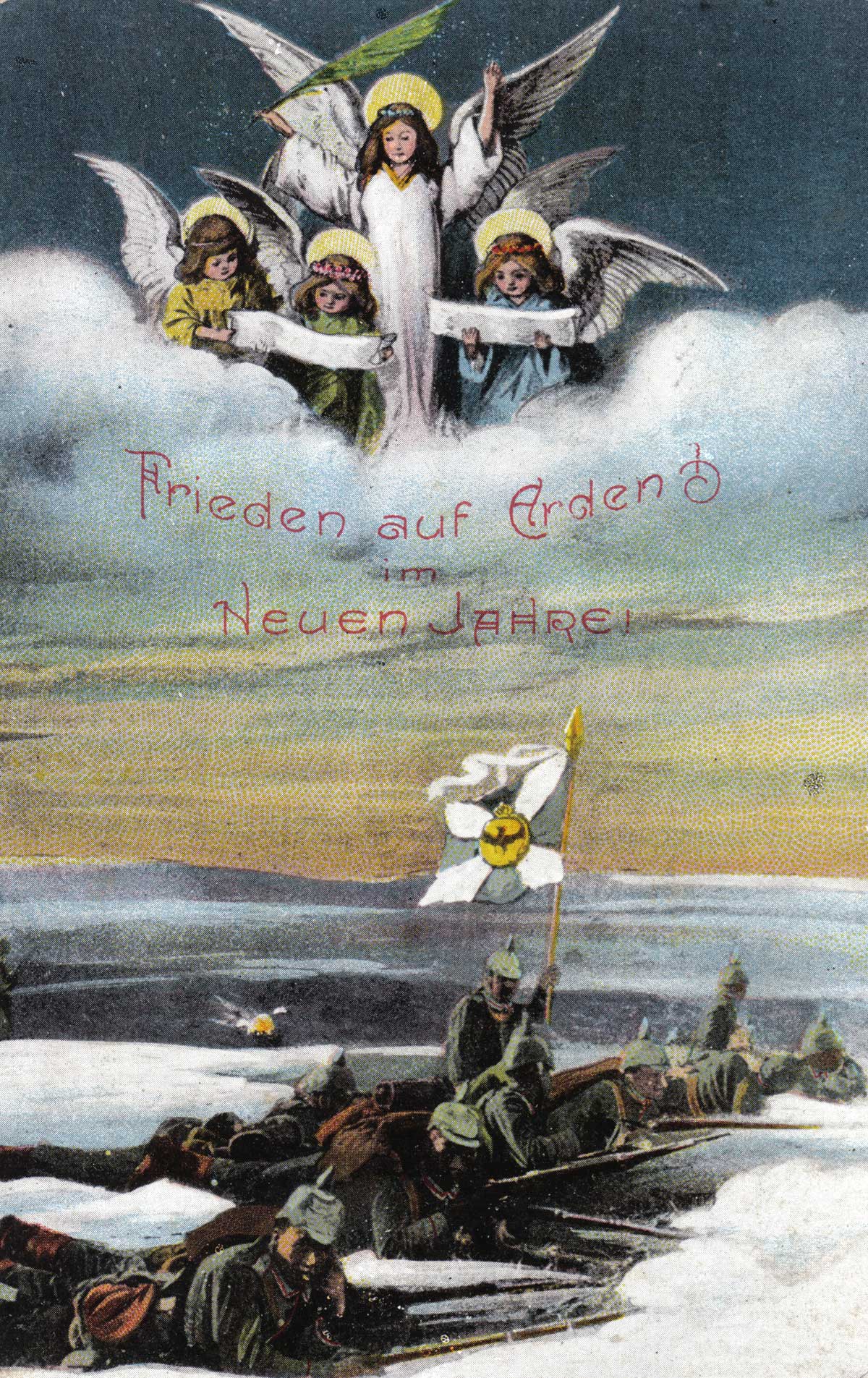
When war broke out in August of 1914, most pundits (and recruiting officers) were predicting that the war would be over before Christmas. As Christmas approached and the war showed no sign of reaching an end or even slowing down, troops on both sides began re-assessing their prospects. Stuck in cold, muddy trenches, assaulted by the stench of unburied dead, tired and homesick, soldiers were hungry for a bit of civilization amidst the brutal reality of war..
For a really good, detailed account, I refer you once again to my favourite source, firstworldwar.com:
http://www.firstworldwar.com/features/c ... struce.htm
The Christmas Truce occurred mainly in the British sector of the Western Front. Isolated instances of truce were observed in some areas of the French sector, but for the most part the war was too bitter there. Hatred between the Germans and the French ran deep, whereas between the Germans and the English (allies for hundreds of years) it was a new and artificial thing. Officially, both the British and German high commands forbade fraternization with the enemy, but many senior officers disagreed with the prohibition and made little effort to enforce it.
In the spirit of Christian generosity, this tournament features full amnesty for free members. You will be able to join this tournament and play all your games even if you have no slots available. (When used, however, your slots will not regenerate until your games are done.)
-----------------------------------------------------------------------------------------------------------------------
Seven 5-player games, random fog, escalating spoils. Maps Flanders, Trench Warfare, England, Scotland, Germany, Age of Merchants, and Halloween Hallows.
-----------------------------------------------------------------------------------------------------------------------
Seven 8-player Terminator games, foggy flat rate, on Christmas map.
-----------------------------------------------------------------------------------------------------------------------
Two 4-player Dubs games, foggy no spoils, on the two World Cup maps.
-----------------------------------------------------------------------------------------------------------------------
Seven 6-player games, sunny nuclear, random trench, on the Europe, Europa, Europe1914, Classic, World 2.1, Doodle Earth, and France 2.1.
Entry fee: 2 tokens + 4 Violet Stars
- Click image to enlarge.
For a really good, detailed account, I refer you once again to my favourite source, firstworldwar.com:
http://www.firstworldwar.com/features/c ... struce.htm
The Christmas Truce occurred mainly in the British sector of the Western Front. Isolated instances of truce were observed in some areas of the French sector, but for the most part the war was too bitter there. Hatred between the Germans and the French ran deep, whereas between the Germans and the English (allies for hundreds of years) it was a new and artificial thing. Officially, both the British and German high commands forbade fraternization with the enemy, but many senior officers disagreed with the prohibition and made little effort to enforce it.
In the spirit of Christian generosity, this tournament features full amnesty for free members. You will be able to join this tournament and play all your games even if you have no slots available. (When used, however, your slots will not regenerate until your games are done.)
-----------------------------------------------------------------------------------------------------------------------
- Phase 1: The Christmas Truce of 1914 was happened all along the Western Front, but it happened more in the the areas held by British troops than in the areas held by French troops. Troops came out of their trenches, collected their dead from the areas between the lines, sang Christmas carols, and in many cases ate meals with and exchanged gifts with members of the enemy army.
We will play on Flanders to mark the area in question, Trench Warfare to represent the state of the war, England, Scotland, and Germany to mark the opposing forces, Age of Merchants to represent gifts (such as tobacco, liquor, and fruit) that were exchanged, and Halloween Hallows to represent the burial of the dead.
Seven 5-player games, random fog, escalating spoils. Maps Flanders, Trench Warfare, England, Scotland, Germany, Age of Merchants, and Halloween Hallows.
-----------------------------------------------------------------------------------------------------------------------
- Phase 2: Initially the truce was simply an armed and hostile ceasefire to collect one's dead and wounded from No Man's Land, but as Tannenbaumen appeared along the German lines a wave of nostalgia and homesickness transformed the truce into a social event.
Seven 8-player Terminator games, foggy flat rate, on Christmas map.
-----------------------------------------------------------------------------------------------------------------------
- Phase 3: In most places the Truce only lasted one day, but in some places it lasted several days, and in at least a couple isolated locations the Truce held until New Year's. In the places where the Truce outlasted Christmas Day, soccer games broke out between Boxing Day and the resumption of hostilities.
Two 4-player Dubs games, foggy no spoils, on the two World Cup maps.
-----------------------------------------------------------------------------------------------------------------------
- Phase 4: The feelings of good will were short-lived. By the end of the year the world was definitely still at war.
Seven 6-player games, sunny nuclear, random trench, on the Europe, Europa, Europe1914, Classic, World 2.1, Doodle Earth, and France 2.1.
Entry fee: 2 tokens + 4 Violet Stars
-
willedtowin1

- Posts: 653
- Joined: Thu May 12, 2011 4:32 pm
- Gender: Male
- Location: Halfway between the Boondocks & Timbucktoo
Re: The Great War
Dukasaur wrote:Our celebration of the legendary Christmas Truce is now open for sign-ups.
Two things separate The Christmas Truce from other tournaments in the Great War series:it·er·a·tion
- There is a full freemium amnesty, to commemorate the Christmas spirit. Free members will not only be able to join the tournament, but they will be put into their games even if they don't have slots available. This is a rarely-offered exemption; please accept it as a gift from Conquer Club and the Community Team.
- This tournament will only regenerate for 48 hours, unlike the much longer periods used for other tournaments in this series. The first one went up at 2120 hours (9:20 pm for people using the archaic 12-hour clock) on December 24th, so the last one will go up on December 26th. Any remaining spaces can still be filled, but no new iterations of this tournament will be created after 2120 on December 26th. Move fast!
ˌitəˈrāSHən/
noun
the repetition of a process or utterance.
a new version of a piece of computer hardware or software.
plural noun: iterations
Merry Christmas from the Great War team!the Christmas Truce Dec 24th 2120 to Dec 26th 2120
The Christmas Truce
When war broke out in August of 1914, most pundits (and recruiting officers) were predicting that the war would be over before Christmas. As Christmas approached and the war showed no sign of reaching an end or even slowing down, troops on both sides began re-assessing their prospects. Stuck in cold, muddy trenches, assaulted by the stench of unburied dead, tired and homesick, soldiers were hungry for a bit of civilization amidst the brutal reality of war..
- Click image to enlarge.
For a really good, detailed account, I refer you once again to my favourite source, firstworldwar.com:
http://www.firstworldwar.com/features/c ... struce.htm
The Christmas Truce occurred mainly in the British sector of the Western Front. Isolated instances of truce were observed in some areas of the French sector, but for the most part the war was too bitter there. Hatred between the Germans and the French ran deep, whereas between the Germans and the English (allies for hundreds of years) it was a new and artificial thing. Officially, both the British and German high commands forbade fraternization with the enemy, but many senior officers disagreed with the prohibition and made little effort to enforce it.
In the spirit of Christian generosity, this tournament features full amnesty for free members. You will be able to join this tournament and play all your games even if you have no slots available. (When used, however, your slots will not regenerate until your games are done.)
-----------------------------------------------------------------------------------------------------------------------
Tournament Phase 1: The Christmas Troops emerged almost spontaneously among the war-weary troops at the end of 1914.
- Phase 1: The Christmas Truce of 1914 was happened all along the Western Front, but it happened more in the the areas held by British troops than in the areas held by French troops. Troops came out of their trenches, collected their dead from the areas between the lines, sang Christmas carols, and in many cases ate meals with and exchanged gifts with members of the enemy army.
We will play on Flanders to mark the area in question, Trench Warfare to represent the state of the war, England, Scotland, and Germany to mark the opposing forces, Age of Merchants to represent gifts (such as tobacco, liquor, and fruit) that were exchanged, and Halloween Hallows to represent the burial of the dead.
Seven 5-player games, random fog, escalating spoils. Maps Flanders, Trench Warfare, England, Scotland, Germany, Age of Merchants, and Halloween Hallows.
-----------------------------------------------------------------------------------------------------------------------
Tournament Phase 2: The appearance of Christmas trees along the German lines triggered a wave of sentimentality.
- Phase 2: Initially the truce was simply an armed and hostile ceasefire to collect one's dead and wounded from No Man's Land, but as Tannenbaumen appeared along the German lines a wave of nostalgia and homesickness transformed the truce into a social event.
Seven 8-player Terminator games, foggy flat rate, on Christmas map.
-----------------------------------------------------------------------------------------------------------------------
Tournament Phase 3: Spontaneous pick-up soccer games broke out in some areas.
- Phase 3: In most places the Truce only lasted one day, but in some places it lasted several days, and in at least a couple isolated locations the Truce held until New Year's. In the places where the Truce outlasted Christmas Day, soccer games broke out between Boxing Day and the resumption of hostilities.
Two 4-player Dubs games, foggy no spoils, on the two World Cup maps.
-----------------------------------------------------------------------------------------------------------------------
Phase 4: The feelings of good will were short-lived. By the end of the year the world was definitely still at war.
- Phase 4: The feelings of good will were short-lived. By the end of the year the world was definitely still at war.
Seven 6-player games, sunny nuclear, random trench, on the Europe, Europa, Europe1914, Classic, World 2.1, Doodle Earth, and France 2.1.
Entry fee: 2 tokens + 4 Violet Stars
Re: The Great War
I'm not sure what you're trying to say. Are you saying I spelled it wrong, or I'm using it wrong, or what? Please explain; I'm really not sure what you're criticizing here.willedtowin1 wrote:Dukasaur wrote:Our celebration of the legendary Christmas Truce is now open for sign-ups.
Two things separate The Christmas Truce from other tournaments in the Great War series:it·er·a·tion
- There is a full freemium amnesty, to commemorate the Christmas spirit. Free members will not only be able to join the tournament, but they will be put into their games even if they don't have slots available. This is a rarely-offered exemption; please accept it as a gift from Conquer Club and the Community Team.
- This tournament will only regenerate for 48 hours, unlike the much longer periods used for other tournaments in this series. The first one went up at 2120 hours (9:20 pm for people using the archaic 12-hour clock) on December 24th, so the last one will go up on December 26th. Any remaining spaces can still be filled, but no new iterations of this tournament will be created after 2120 on December 26th. Move fast!
ˌitəˈrāSHən/
noun
the repetition of a process or utterance.
a new version of a piece of computer hardware or software.
plural noun: iterations
Merry Christmas from the Great War team!the Christmas Truce Dec 24th 2120 to Dec 26th 2120
The Christmas Truce
When war broke out in August of 1914, most pundits (and recruiting officers) were predicting that the war would be over before Christmas. As Christmas approached and the war showed no sign of reaching an end or even slowing down, troops on both sides began re-assessing their prospects. Stuck in cold, muddy trenches, assaulted by the stench of unburied dead, tired and homesick, soldiers were hungry for a bit of civilization amidst the brutal reality of war..
- Click image to enlarge.
For a really good, detailed account, I refer you once again to my favourite source, firstworldwar.com:
http://www.firstworldwar.com/features/c ... struce.htm
The Christmas Truce occurred mainly in the British sector of the Western Front. Isolated instances of truce were observed in some areas of the French sector, but for the most part the war was too bitter there. Hatred between the Germans and the French ran deep, whereas between the Germans and the English (allies for hundreds of years) it was a new and artificial thing. Officially, both the British and German high commands forbade fraternization with the enemy, but many senior officers disagreed with the prohibition and made little effort to enforce it.
In the spirit of Christian generosity, this tournament features full amnesty for free members. You will be able to join this tournament and play all your games even if you have no slots available. (When used, however, your slots will not regenerate until your games are done.)
-----------------------------------------------------------------------------------------------------------------------
Tournament Phase 1: The Christmas Troops emerged almost spontaneously among the war-weary troops at the end of 1914.
- Phase 1: The Christmas Truce of 1914 was happened all along the Western Front, but it happened more in the the areas held by British troops than in the areas held by French troops. Troops came out of their trenches, collected their dead from the areas between the lines, sang Christmas carols, and in many cases ate meals with and exchanged gifts with members of the enemy army.
We will play on Flanders to mark the area in question, Trench Warfare to represent the state of the war, England, Scotland, and Germany to mark the opposing forces, Age of Merchants to represent gifts (such as tobacco, liquor, and fruit) that were exchanged, and Halloween Hallows to represent the burial of the dead.
Seven 5-player games, random fog, escalating spoils. Maps Flanders, Trench Warfare, England, Scotland, Germany, Age of Merchants, and Halloween Hallows.
-----------------------------------------------------------------------------------------------------------------------
Tournament Phase 2: The appearance of Christmas trees along the German lines triggered a wave of sentimentality.
- Phase 2: Initially the truce was simply an armed and hostile ceasefire to collect one's dead and wounded from No Man's Land, but as Tannenbaumen appeared along the German lines a wave of nostalgia and homesickness transformed the truce into a social event.
Seven 8-player Terminator games, foggy flat rate, on Christmas map.
-----------------------------------------------------------------------------------------------------------------------
Tournament Phase 3: Spontaneous pick-up soccer games broke out in some areas.
- Phase 3: In most places the Truce only lasted one day, but in some places it lasted several days, and in at least a couple isolated locations the Truce held until New Year's. In the places where the Truce outlasted Christmas Day, soccer games broke out between Boxing Day and the resumption of hostilities.
Two 4-player Dubs games, foggy no spoils, on the two World Cup maps.
-----------------------------------------------------------------------------------------------------------------------
Phase 4: The feelings of good will were short-lived. By the end of the year the world was definitely still at war.
- Phase 4: The feelings of good will were short-lived. By the end of the year the world was definitely still at war.
Seven 6-player games, sunny nuclear, random trench, on the Europe, Europa, Europe1914, Classic, World 2.1, Doodle Earth, and France 2.1.
Entry fee: 2 tokens + 4 Violet Stars
“Life is a shipwreck, but we must not forget to sing in the lifeboats.”
― Voltaire
― Voltaire
-
willedtowin1
- Posts: 653
- Joined: Thu May 12, 2011 4:32 pm
- Gender: Male
- Location: Halfway between the Boondocks & Timbucktoo
Re: The Great War
for Us Peons who didnt know the word well....lol
Re: The Great War
Ah, ok.willedtowin1 wrote:for Us Peons who didnt know the word well....lol


“Life is a shipwreck, but we must not forget to sing in the lifeboats.”
― Voltaire
― Voltaire
-
IcePack

- Multi Hunter

- Posts: 16851
- Joined: Wed Aug 04, 2010 6:42 pm
- Gender: Male
- Location: California
Re: The Great War
Unfortunately I tend to agree with shoop. This is something I would be really interested in participating in. However since tokens are only dropped with very specific game types, when it started I tried getting tokens and realized I was never going to be able to participate that much because the only token drop games were so far from my regular game selection, I would never get any unless I dedicated 100% of my pick up games to tokens and 100% of my other time on the games.
It would be nice to have tokens be more widely available / dropped on many game types so that even casual players (for a casual site) could participate from time to time without killing themselves with game counts. Then have higher drop rates on whatever games you have it on now, so that the die hards can go gung-ho and join everything in site with 100 tokens they've picked up. Allowing more people to particioate
It would be nice to have tokens be more widely available / dropped on many game types so that even casual players (for a casual site) could participate from time to time without killing themselves with game counts. Then have higher drop rates on whatever games you have it on now, so that the die hards can go gung-ho and join everything in site with 100 tokens they've picked up. Allowing more people to particioate
fac vitam incredibilem memento vivere
Knowledge Weighs Nothing, Carry All You Can
-
stealth99

- Posts: 576
- Joined: Tue Oct 23, 2007 4:35 pm
- Gender: Male
- Location: St. John's, Newfoundland, Canada......oldest and most easterly city in north america
Re: The Great War
Guys click on the spoiler above, in Dukasaur's post about the Christmas Truce, for a link leading to an article about the Christmas Truce. It is a fascinating read and a story that we all should know, particularly this time of year.
There were actual soccer games played in no mans land on Christmas Day, with scores of the games reported in British Newspapers. Crazy.
Thanks dk for bringing us this stuff. What an opportunity to follow this 4 year great war, battle by battle. Interesting to see that when people at home received letters from their loved ones in the war, it was customary to send them to the newspaper to have the letters published for all to see. That was the way people got their news.
Incredible stuff.
There were actual soccer games played in no mans land on Christmas Day, with scores of the games reported in British Newspapers. Crazy.
Thanks dk for bringing us this stuff. What an opportunity to follow this 4 year great war, battle by battle. Interesting to see that when people at home received letters from their loved ones in the war, it was customary to send them to the newspaper to have the letters published for all to see. That was the way people got their news.
Incredible stuff.