Moderator: Community Team
Symmetry wrote:I think that makes a fine bookend to this line of argument. We done here? I'll probably reply if people want to continue the discussion. For me, the argument is complete. It was an important issue for me, and shouldn't really have detracted so much from the rest of the competition.
I'm a sucker for debate though.

betiko wrote:Symmetry wrote:I think that makes a fine bookend to this line of argument. We done here? I'll probably reply if people want to continue the discussion. For me, the argument is complete. It was an important issue for me, and shouldn't really have detracted so much from the rest of the competition.
I'm a sucker for debate though.
Symmetry, how about you create a tournament so we can all have a laugh? You wouldn't even manage to make a propper OP, needless to say you'd never manage to get it running and even less would you be able to make the follow up.
You're basically just a little parasite, with just one ability.. criticize other people's work and good intentions.
wikipedia wrote:The Battle of Wadi, occurring on 13 January 1916,[2] was an unsuccessful attempt by British forces fighting in Mesopotamia (present-day Iraq) during World War I to relieve beleaguered forces under Sir Charles Townshend then under siege by the Ottoman Sixth Army at Kut-al-Amara.[3][4]
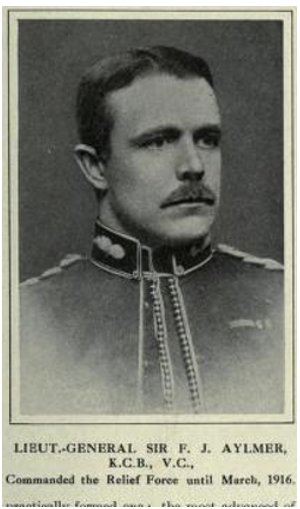
Pushed by regional British Commander-in-Chief Sir John Nixon, General Fenton Aylmer launched an attack against Ottoman defensive positions on the banks of the Wadi River.[5][6] The Wadi was a steep valley of a stream that ran from the north into the River Tigris, some 6 miles (9.7 km) upstream towards Kut-al-Amara from Sheikh Sa'ad.[7] The attack is generally considered as a failure, as although Fenton managed to capture the Wadi, it cost him 1,600 men. The British failure led to Townshend's surrender, along with 10,000 of his men, in the largest single surrender of British troops up to that time. However, the British recaptured Kut in February 1917, on their way to the capture of Baghdad sixteen days later on 11 March 1917
first world war dot com wrote:The first attempt to relieve Sir Charles Townshend's beleaguered force under siege by the Turks at Kut-al-Amara had ended in costly failure at Sheikh Sa'ad. Pushed however by regional British Commander-in-Chief Sir John Nixon, General Aylmer was obliged to rapidly launch another attempt within a week of Sheikh Sa'ad.
While Aylmer was developing a somewhat sceptical view of his prospects of successfully relieving Kut, Nixon had no such doubts. He believed that Aylmer's force of 10,000 men, added to Townshend's 10,000 in Kut, would prove sufficient to break the notoriously unreliable and ill-disciplined Turkish army.
(...)
Aylmer began operations on 13 January 1916. Initially intended to begin during early morning the attack was delayed pending dissipation of a morning mist. However this took rather longer than anticipated, until almost 1pm; meanwhile Aylmer's artillery laboriously crossed the Wadi in readiness to shell the Turk positions.
Meeting little opposition, at least initially, British infantry advanced in thin numbers. So thin indeed that in many places the British advanced directly past Turkish posts, exposing themselves to withering fire from behind.
Quickly becoming bogged down as the element of surprise was lost - 28th Brigade's frontal attack was entirely repulsed - and forced to deal with the unusual circumstances of having to defend from behind, the British advance rapidly slowed. Now aware of British plans Khalil's force swiftly redeployed from a north-south facing position to east-west to avoid being outflanked.


Dukasaur wrote:So, we're now almost a full year behind. A lot of the tournament writers that were helping in the beginning have dropped out, and I just can't keep up with it. Here's a list of tournaments that should have launched in the last eleven months but didn't because I couldn't keep up with writing them. If anyone wants to take a stab at any of them, that would be great. Don't worry that you don't know how to code the autotournaments; I can take care of that. I just need the composition.If any of the above makes your short list of "most fascinating battles of World War I", you could consider writing a tournament about it.
- Asiago (battle fought 15th of May, 1916, therefore the corresponding tournament should have launched 15th of May, 2016)
- Trentino (battle fought 15th of May, 1916, therefore the corresponding tournament should have launched 15th of May, 2016)
- Jutland (battle fought 31st of May, 1916, therefore the corresponding tournament should have launched 31st of May, 2016)
- Lutsk (battle fought 4th of June, 1916, therefore the corresponding tournament should have launched 4th of June, 2016)
- Khanaquin (battle fought 4th of June, 1916, therefore the corresponding {etc., etc., I think you get the pattern.})
- First Day of the Battle of the Somme, July 1st, 1916
- Bazentin Ridge, July 14th, 1916
- Delville Wood, July 15th, 1916
- Battle of Pozières, July 23rd, 1916
- Romani, August 3rd, 1916
- Sixth Battle of the Isonzo, August 6th, 1916
- Gorizia, August 6th, 1916
- Battle of Guillemont, Sept 3rd
- Seventh Battle of the Isonzo, Sept 14th
- Battle of Flers-Courcelette, Sept 15th
- Eighth Isonzo, October 8th, 1916
- Ninth Isonzo, November 1st
- Maghdaba, December 14th
- Second Kut, Dec. 15th
- Opening 1917, the small but exciting Battle of Khadairi Bend, January 9th, 1917
- Battle of Nahr-al-Kalek, February 26th, 1917
- Fall of Baghdad, March 11th, 1917
- Samarrah, March 13th
- Fallujah, March 19th
- Jebel Hamrin, March 25
- First Gaza, March 26h
[spoiler=how to write a GREAT WAR tourney]The first step is to understand the battle that you're doing. I usually start with the wikipedia article (pretty much every battle that's ever been fought has a wikipedia article) and then I check out First World War dot com, and then if I'm still not satisfied I'll look it up on kaisercross or some other sites.
http://www.wikipedia.org
http://www.firstworldwar.com
http://www.kaiserscross.com/40020.html
Once you have an idea of how the battle went, the main issue is "what makes it unique?" Is it memorable because it was exceptionally bloody (like the Somme) or extraordinarily cold (like the Battle of Lodz) , or because the battle was interrupted by swarms of killer bees (as was the Battle of Tanga)?
A tournament should have a bit of the flavour of the actual battle. We're trying as best we can to give people the feeling of being there. Now, Risk is a silly babies' game and CC is a pretty blunt instrument, so it really is not easy creating a realistic battle simulation using CC games. Still, we do the best we can.
Here's some aspects of battle, and some of the ways we've represented them:
- If it was a winter battle, and cold weather played a part, we've used the Antarctica map.
- If it was a summer battle, and hot weather played a part, we could simulate that with Africa II or maybe Oasis. I got lucky with the battle of Sandfontein -- that actually was a battle fought for control of an oasis, so I used the Oasis map pretty heavily there.
- If it was a fast paced battle where things changed rapidly, we can use Escalating Spoils to create fast games. Other settings that tend to produce fast games are Sunny, No Fog, No Trench, Freestyle, and Unlimited forts.
- If it was a slow, ponderous battle where every inch took a week to gain, we can use Flat Rate and Trench to create slow games. Other slow settings include No Spoils, Adjacent Forts, and to some degree Fog.
- If there was a lot of artillery bombardment, we can simulate that with Nuclear Spoils. We can also use maps where bombardment is important, like Waterloo, Arms Race, Stalingrad, or Duck and Cover.
- Betrayals and mutinies can be represented with Zombie spoils (your own troops turn against you.)
- Amphibious landings or rapid manouvres can be represented with Parachute reinforcements.
- We can of course use maps of the place, and often we have more than one choice. If the battle is in France, we have France, France 2.1, and France 1789 to choose from. Still, a third of all the battles of WWI were fought in France, so it gets pretty limiting if you're too geographically-minded.
- If the battle is in Italy, we can use Italy or Unification Italy but we can also use something like Imperium Romanum.
- If the terrain is a factor, we can look at the terrain maps we have on CC. If it's a big featureless flat field, we can use something like Feudal Epic that's a huge mass of flat land. Or, if we're in the mountains, we can use King of the Mountains as a map. In the first Masurian Lakes battle, James used the Great Lakes map to simulate fighting around the lakes. And so on.
- Labyrinth can represent swampland, and Draknor does a great job of simulating a network of tunnels.
- To avoid using the same maps over and over again, you have to think outside the box. Suez was a really one-sided British victory, so in the final round I used the Trafalgar map, which was another really one-sided British victory. In one tournament I'd already overused some of the obvious choices, so I noted that the German commander was from the Baltic coast, and I stuck in the Baltic Crusades map. If you had a British commander from London you could stick in the London map, if a decorated hero of the battle was from Philadelphia, you could throw in Philadelphia. If someone famous in the battle was a former chess champion you could throw in Knights. In one tournament I used the Steamworks map, with its balloons, to simulate the use of reconnaissance ballooons by the French. In Bita Paka I used Woodboro, because the battle was primarily fought for control of the radio station. That was actually a perfect map, I'm really happy we had it.
Once you have your maps and settings, decide on the game types and structures. How many players start, how many rounds do they play, which rounds are elimination rounds and which are non-elimination.[/spoiler]
ConfederateSS wrote:Dukasaur wrote:So, we're now almost a full year behind. A lot of the tournament writers that were helping in the beginning have dropped out, and I just can't keep up with it. Here's a list of tournaments that should have launched in the last eleven months but didn't because I couldn't keep up with writing them. If anyone wants to take a stab at any of them, that would be great. Don't worry that you don't know how to code the autotournaments; I can take care of that. I just need the composition.If any of the above makes your short list of "most fascinating battles of World War I", you could consider writing a tournament about it.
- Asiago (battle fought 15th of May, 1916, therefore the corresponding tournament should have launched 15th of May, 2016)
- Trentino (battle fought 15th of May, 1916, therefore the corresponding tournament should have launched 15th of May, 2016)
- Jutland (battle fought 31st of May, 1916, therefore the corresponding tournament should have launched 31st of May, 2016)
- Lutsk (battle fought 4th of June, 1916, therefore the corresponding tournament should have launched 4th of June, 2016)
- Khanaquin (battle fought 4th of June, 1916, therefore the corresponding {etc., etc., I think you get the pattern.})
- First Day of the Battle of the Somme, July 1st, 1916
- Bazentin Ridge, July 14th, 1916
- Delville Wood, July 15th, 1916
- Battle of Pozières, July 23rd, 1916
- Romani, August 3rd, 1916
- Sixth Battle of the Isonzo, August 6th, 1916
- Gorizia, August 6th, 1916
- Battle of Guillemont, Sept 3rd
- Seventh Battle of the Isonzo, Sept 14th
- Battle of Flers-Courcelette, Sept 15th
- Eighth Isonzo, October 8th, 1916
- Ninth Isonzo, November 1st
- Maghdaba, December 14th
- Second Kut, Dec. 15th
- Opening 1917, the small but exciting Battle of Khadairi Bend, January 9th, 1917
- Battle of Nahr-al-Kalek, February 26th, 1917
- Fall of Baghdad, March 11th, 1917
- Samarrah, March 13th
- Fallujah, March 19th
- Jebel Hamrin, March 25
- First Gaza, March 26h
[spoiler=how to write a GREAT WAR tourney]The first step is to understand the battle that you're doing. I usually start with the wikipedia article (pretty much every battle that's ever been fought has a wikipedia article) and then I check out First World War dot com, and then if I'm still not satisfied I'll look it up on kaisercross or some other sites.
http://www.wikipedia.org
http://www.firstworldwar.com
http://www.kaiserscross.com/40020.html
Once you have an idea of how the battle went, the main issue is "what makes it unique?" Is it memorable because it was exceptionally bloody (like the Somme) or extraordinarily cold (like the Battle of Lodz) , or because the battle was interrupted by swarms of killer bees (as was the Battle of Tanga)?
A tournament should have a bit of the flavour of the actual battle. We're trying as best we can to give people the feeling of being there. Now, Risk is a silly babies' game and CC is a pretty blunt instrument, so it really is not easy creating a realistic battle simulation using CC games. Still, we do the best we can.
Here's some aspects of battle, and some of the ways we've represented them:
- If it was a winter battle, and cold weather played a part, we've used the Antarctica map.
- If it was a summer battle, and hot weather played a part, we could simulate that with Africa II or maybe Oasis. I got lucky with the battle of Sandfontein -- that actually was a battle fought for control of an oasis, so I used the Oasis map pretty heavily there.
- If it was a fast paced battle where things changed rapidly, we can use Escalating Spoils to create fast games. Other settings that tend to produce fast games are Sunny, No Fog, No Trench, Freestyle, and Unlimited forts.
- If it was a slow, ponderous battle where every inch took a week to gain, we can use Flat Rate and Trench to create slow games. Other slow settings include No Spoils, Adjacent Forts, and to some degree Fog.
- If there was a lot of artillery bombardment, we can simulate that with Nuclear Spoils. We can also use maps where bombardment is important, like Waterloo, Arms Race, Stalingrad, or Duck and Cover.
- Betrayals and mutinies can be represented with Zombie spoils (your own troops turn against you.)
- Amphibious landings or rapid manouvres can be represented with Parachute reinforcements.
- We can of course use maps of the place, and often we have more than one choice. If the battle is in France, we have France, France 2.1, and France 1789 to choose from. Still, a third of all the battles of WWI were fought in France, so it gets pretty limiting if you're too geographically-minded.
- If the battle is in Italy, we can use Italy or Unification Italy but we can also use something like Imperium Romanum.
- If the terrain is a factor, we can look at the terrain maps we have on CC. If it's a big featureless flat field, we can use something like Feudal Epic that's a huge mass of flat land. Or, if we're in the mountains, we can use King of the Mountains as a map. In the first Masurian Lakes battle, James used the Great Lakes map to simulate fighting around the lakes. And so on.
- Labyrinth can represent swampland, and Draknor does a great job of simulating a network of tunnels.
- To avoid using the same maps over and over again, you have to think outside the box. Suez was a really one-sided British victory, so in the final round I used the Trafalgar map, which was another really one-sided British victory. In one tournament I'd already overused some of the obvious choices, so I noted that the German commander was from the Baltic coast, and I stuck in the Baltic Crusades map. If you had a British commander from London you could stick in the London map, if a decorated hero of the battle was from Philadelphia, you could throw in Philadelphia. If someone famous in the battle was a former chess champion you could throw in Knights. In one tournament I used the Steamworks map, with its balloons, to simulate the use of reconnaissance ballooons by the French. In Bita Paka I used Woodboro, because the battle was primarily fought for control of the radio station. That was actually a perfect map, I'm really happy we had it.
Once you have your maps and settings, decide on the game types and structures. How many players start, how many rounds do they play, which rounds are elimination rounds and which are non-elimination.[/spoiler]
-------You really want to make up 2016 that flew by?
-------Outside of the 3 wonderful research sites you list, would you mind if I used books in my study?
-------Give me a week to look things over...I might be able to throw some time your way...ConfederateSS.out!(The Blue and Silver Rebellion)...
.....I know, I'm probably one of the last people you would expect to bring the cavalry to the rescue...I speak out because I love Conquer Club...All most of us want...For the High Command to hear us...To better the site...
......How many people knew Japan was known for great treatment of it's P.O.W.'s in WWI?...Might need some Japan maps in TGW marathon...

[/spoiler]xroads wrote:The Battle of Jutland was the only major sea battle of WWI, and the winner is still in doubt to this day. It was fought in the North Sea off the coast of Denmark from May 31st to June st 2016.
From WIKI
https://en.wikipedia.org/wiki/Battle_of_Jutland
"Germany's High Seas Fleet intended to lure out, trap, and destroy a portion of the Grand Fleet, as the German naval force was insufficient to openly engage the entire British fleet. This formed part of a larger strategy to break the British blockade of Germany and to allow German naval vessels access to the Atlantic. Meanwhile, Great Britain's Royal Navy pursued a strategy of engaging and destroying the High Seas Fleet, thereby keeping German naval forces contained and away from Britain and her shipping lanes.[4]
The Germans planned to use Vice-Admiral Franz Hipper's fast scouting group of five modern battlecruisers to lure Vice-Admiral Sir David Beatty's battlecruiser squadrons into the path of the main German fleet. They stationed submarines in advance across the likely routes of the British ships. However, the British learned from signal intercepts that a major fleet operation was likely, so on 30 May Jellicoe sailed with the Grand Fleet to rendezvous with Beatty, passing over the locations of the German submarine picket lines while they were unprepared. The German plan had been delayed, causing further problems for their submarines, which had reached the limit of their endurance at sea.
On the afternoon of 31 May, Beatty encountered Hipper's battlecruiser force long before the Germans had expected. In a running battle, Hipper successfully drew the British vanguard into the path of the High Seas Fleet. By the time Beatty sighted the larger force and turned back towards the British main fleet, he had lost two battlecruisers from a force of six battlecruisers and four powerful battleships – though he had sped ahead of his battleships of 5th Battle Squadron earlier in the day, effectively losing them as an integral component for much of this opening action against the five ships commanded by Hipper. Beatty's withdrawal at the sight of the High Seas Fleet, which the British had not known were in the open sea, would reverse the course of the battle by drawing the German fleet in pursuit towards the British Grand Fleet. Between 18:30, when the sun was lowering on the western horizon, back-lighting the German forces, and nightfall at about 20:30, the two fleets – totalling 250 ships between them – directly engaged twice.
Fourteen British and eleven German ships sank, with great loss of life. After sunset, and throughout the night, Jellicoe manoeuvred to cut the Germans off from their base, hoping to continue the battle the next morning, but under the cover of darkness Scheer broke through the British light forces forming the rearguard of the Grand Fleet and returned to port.[5]
Both sides claimed victory. The British lost more ships and twice as many sailors but succeeded in containing the German fleet. However, the British press criticised the Grand Fleet's failure to force a decisive outcome, while Scheer's plan of destroying a substantial portion of the British fleet also failed. Finally, the British strategy of denying Germany access to both the United Kingdom and the Atlantic did succeed, which was the British long-term goal.[6] The Germans' "fleet in being" continued to pose a threat, requiring the British to keep their battleships concentrated in the North Sea, but the battle re-inforced the German policy of avoiding all fleet-to-fleet contact. At the end of 1916, after further unsuccessful attempts to reduce the Royal Navy's numerical advantage, the German Navy accepted that its surface ships had been successfully contained, subsequently turning its efforts and resources to unrestricted submarine warfare and the destruction of Allied and neutral shipping, which - along with the Zimmermann Telegram - by April 1917 triggered the United States of America's declaration of war on Germany.[7]"
Since this battle was a big guessing game of who was where, all games will be fog. All games will have 20 round limits
Round 1 48 players High Seas 8 player games, no spoils, 3 games
Round 2 48 players Europa 4 player games, escalating assassin 5 games per round
Round 3 48 players British isles 1 vs 1, games 5 games per round. Fog, escalating, parachute.
Score Resets
Round 4 36 players Trafalgar. 6 player, fog, freestyle, escalating. 5 games
Round 5 36 players, Spanish Armada 4 players, fog, nuclear 3 games
Round 6 36 players Battle of Actium 1vs1 fog, flat rate, 5 games
Score Resets
Round 7 24 players Kingdom of Denmark 6 players, fog, nuclear, 5 games
Round 8 24 players Nordic Nations 4 players, fog, flat rate 3 games
Round 9 24 players Copenhagen 1vs1 fog, 5 games, nuclear
Score Resets
Round 10 12 players High Seas 6 player games escalating, 5 games
Round 11 12 players Germany 4 players, assassin, escalating. 5 games
Round 12 12 players 1982 fog trench escalating 1vs1 7 games
ConfederateSS wrote:The Battle of Asiago/Story line.
-----Hello all, my name is Wayward Day. I am an American who is studying abroad in Florence, Italy. One day I decided to go site seeing. To enjoy and soak the 1000's of years of History of a country and the surrounding area of Europe. While I'm lucky enough to be here free on scholarships. "Luck" is the key work, as I was soon to find out.
-----I chose to go biking in the northern part of Italy. I found myself in the mountains of The Alps known as the Dolomites. In the area of Trentino. As I explored the area. I came across a path with white and yellow dove symbols painted everywhere. White doves on wood and yellow doves on rock. There was a sigh,"Sentiero della Pace"(Path of Peace). One of the symbols started glowing. Yup, you guessed it. I touched it. Bright flashes of light, then I passed out.
-----When I awoke. It was to the sound of thunder or what I thought was thunder. I soon realized I wasn't where I thought I was. Oh, I was in the same spot. But I found myself dressed in different clothes. I looked around, the painted doves had vanished. I came across a man laying on the ground. When I spoke to him. My words were no longer in English. But Italian and German.
-----He told me he was dressed like an Austro-Hungarian. Because he was an Italian spy. He was dying and told me to get these papers to Italian General Luigi Cadorna. Leader of the Italian armies. But he sorta laughed. For Cadorna is one of the worst generals ever, he claimed. As he handed me his satchel his eyes closed for the last time. I soon came to accept where I was. Right smack in the middle of The First World War. Although part of me still didn't believe it.
-----When I arrived at Italian H.Q.. I was taken to Cadorna. I pulled the papers out of the satchel and handed them to him. I told him it was the Austro-Hungarian battle plans. MARKED: The Strafexpedition or punishment expedition. He was impressed that I spoke English, Italian and German. The plans were by the leader of the Austro-Hungarian forces. General Conrad von Hoetzendorff. He wanted Italy to pay for switching sides in the war.
-----Austro-Hungarian's army was made up of: 3rd and 11th armies,300 battalions and 2,000 artillery guns. Where as Italy's army was made up of: 1st and 5th armies, 172 battalions and 850 artillery guns.
-----Conrad's plan was to break through the Alps into the Venetian Plain. Cut of the Italian troops along the Isonzo in the south. Forcing Italy out of the war. The plans revealed the attack had been postponed 4 times do to snow. The new target date was today May 15th, 1916.
-----As I was informing Cadorna. He stopped me. He let me know the attack is underway. The thunder I heard this morning. Was the Austro-Hungarian guns opening up a barrage of shells raining down on Italian positions all along the line. As 400,000 Aus/Hun troops poured in there after. Although surprised ,Cadorna was already making plans in the Venetian Plain. He was pulling troops together from all over Italy to form The V Army. In case his forces are beaten back in the Alps. Up until the attack. Cadorna considered the Trentino region a backwater place. As opposed to the Isonzo river. Most Italian soldiers felt the same way. The area had kept Italy safe from invaders. As far back as The Roman Empire. No one would be crazy enough to try an attack there. Cadorna would soon come to realize just how unpredictable Conrad is.
-----As news from the front lines poured in. I would inform Cadorna. During which time he would tell me stories of what Austro-Hungarian troops were doing in the region before Italy switched sides. A deal with the Allies which would give Italy land from the Aus/Hun Empire. Where Italian people lived. The Aus/Hun Empire was arresting anyone who refused to serve in the army. Or those who tried to help them. The Aus/Hun Empire would send them to refugees camps by train. A long the way. Boys and men would be taken off the trains. To help dig and build fortifications along the Aus/Hun-Italian border. The most famous of these. Was The Emperor's Fortress. Built by Emperor Franz Josef. It was his own Maginot Line if you will, so to speak.
-----As the Aus/Hun guns continued to pound the Italians. The barrage would last from, May 15th to May 20th. The Aus/Hun army knew from fighting the Russians in the Carpathians. That it was vital to secure an army's flanks in mountain warfare. Cadorna told me. He was well aware. The wounded started returning from the battlefield. Many Italians were pummeled not just by the shells from the Aus/Hun army. But by the rocky ground, that showered them with lethal chips of rock and steel.
-----As the days past the news was not good for Cadorna. The Aus/Hun army was pushing through the Asiago Plain. The Italian reinforcements tried to hold back the Aus/Hun's at bay. But to no avail. The Italians were being pushed back to their last line of defense. As they knew failure here, would destroy all of Italy's defense everywhere.
-----The 11th Aus/Hun army under the command of Count Viktor Dankl von Krasnik on May 15th crushed the Italian forces between Vallarsa and Val d'Astro. All Cadorna could do is listen as. Aus/Hun army would take Val Terragnolo and the Altopiano di Tonezza. Between May 15th and May 20th, Colsanto, Mount Maggio, Mount Torano, Mount Campomolon and Mount Spitz di Tonezza all fell into Aus/Hun hands. On May 20th the 3rd Aus/Hun army under the command of General Hermann Kovess. Was thrown into the battle at Altopiano dei Settie Comuni.
-----I could see the 1,000 yard stare in Cadorna's face. As he was coming to grips with the facts that the Aus/Hun army in a span of 2 weeks. With a flood of 400,000 troops Conrad had pulled off the Russian front. Had smashed through the Italian center line. Captured 30,000 Italian soldiers. Was on the door step of the Venetian Plain. With only a few natural barriers that Cadorna hoped would stand in their way. Cadorna could only imagine what his counterpart General Conrad von Hoetzendorff was feeling. As Hoetzendorff had his most goal of the offensive in reach. The encirclement of Isonzo. With the news on paper coming in. The Aus/Hun army leaders had every reason to celebrate.
-----Cadorna could see his forces were not going easy. Their resolve remained unbroken. As the Aus/Hun army was finding them to be rugged as they advanced. As the center was cracking. The Italian flanks were holding strong. Which pleased Cadorna. He knew that is what Hoetzendorff was trying to break.
-----As the reports of the fighting came in. Put on the war front battle board. One thing was becoming quite clear to Cadorna. Although the Aus/Hun army controlled the best part of the Sette Communi plateau and the upper portion of the Brenta valley. That area was a sorta blocked in place. Which made it hard to maneuver or advance. Which was a blessing for Cadorna. It gave the Italian troops a chance to gain time. To regroup and catch a second wind. I watched as Cadorna addressed his men. As he prepared Italy's last stand, on the Venetian Plain. He shouted his order,"Remember that here we defend the soil of our country and the honor of our army. These positions are to be defended to the death.
-----Cadorna let on to me. He had pulled of a miracle. In just 3 days time. He pulled troops from all over Italy. Formed the V Army to make a last stand on the Venetian Plain. The V army was made up of 5 corps, a cavalry div., and 400,000 men in total. He knew full well, that the Aus/Hun army was running out of steam. They had no help of their own to call on. The rest of their troops were tied up elsewhere.
-----On May 25th knowing the Italians were regrouping. The Aus/Hun army attacked Monte Cimone north of Arsiero, pushing 2 Italian Alpini battalions. Causing Cadorna to realign his front lines. Some good news for Cadorna coming in was that the Aus/Hun High Command with it's early success in the offensive. Became overconfident and sent troops East from the front. Fearing a Russian attack.
-----On June 4th the Italian H.Q. exploded in cheers. For news came in. That in Glacia, the Russians opened up an offensive of their own(not that Italy hasn't been begging them for weeks). Under the command of General Aleksei Brusilov. June 5th marked the High point of the Aus/Hun offensive in Trentino. The momentum was disappearing for the Aus/Huns. Was quickly building steam on the Italian side.
-----Cadorna started his counteroffensive. Unleashing the V army on June 14th. On June 16th they were pushing at the Aus/Hun flanks. The same day General Hoetzendorff called of his offensive. News was to cause mass celebration on June 25th throughout Italy. For on the 25th of June, The Austro-Hungarian High Command ended all offensives in the region. Cadorna had done what many armies had done before him. Repel the Invaders on the Venetian Plain. Saved Italy, keeping Italy in the war. In one of the treacherous battles of World War I. Where more died from the cold and nature, then from the enemy.
-----As I turned and took one last look at a relieved Italian H.Q., I started walking away. My satchel started glowing, like the dove symbol earlier. Flash of light...Where will I find myself this time?
[/spoiler]ConfederateSS wrote:Battle of Asiago/Tournament...1/11
-------Wayward Day's Diary:
-----When I arrived at Italian H.Q.. The Austro-Hungarian offensive(The Strafexpedition) was underway. The Aus/Hun High Command took 18 divisions from the Eastern front. Made up of 400,000 men and 2,000 heavy guns. Their hope was to surprise and smash the Italians in The Alps. Break through to the Venetian Plain. Cut the southern Italian forces at the Isonzo river off. Knocking Italy out of the war.
-----Early successes almost made it possible. If not for a brave last stand by the Italians on the Venetian Plain. Also at the same time, with a weakened Austro-Hungarian Eastern front. The Russians launched an offensive of their own. In a turn of events. The Aus/Hun High Command had to stop their offensive(Strafexpedition). Which allowed Italy to stay in The First World War.
Round 1:(Reason for map---Armies since the Roman Empire have tried to invade Italy from the Alps.)
The Strafexpedition, Gen. Conrad von Hoetzendorff's Austro-Hungarian plan to punish Italy for switching sides in The First World War. With the thumbs up from Archduke Eugene. The offensive against Italy in the Alps opened up on May 15th, 1916. With a barrage of 2,000 artillery guns raining down on Italian lines all along the front.
24 start and 24 move on. Map: Imperium Romanum.,8 players play once, Terminator, Auto, Sequential, Flat Rate, Adjacent, Fog, 30 rounds.
Round 2:
On May 16 Cadorna seen the key position of Mount Pasubio had not been occupied. Ann Italian battalion was hurried up. In a night time march by way of the Passo di Xamo. They beat the Aus/Hun army by 2 hours. When the Aus/Hun army showed up. They were quickly repelled by the Italian defenders.
24 start and 22 move on. Map: King of The Mountains.,1-vs-1,3 games, standard, Auto, Sequential, Escalating, Chained, Fog, 30 rounds.
Round 3:(Reason for map---Many died from frostbite.)
On May 24th The Aus/Hun infantry advanced along the great ridge from Col Santa. Gen. Bertorri had just 4 brigades to stop them by the Barcola Pass. The conditions were very hard, and frostbite was responsible for many casualties.For the snow still lay deep on the high ridges.
22 start and 18 move on. Map: Dustbowl., 1-vs-1, 5 games, Standard, Auto, Sequential,(Flat Rate, Nuclear,Zombie),(Chained,Adjacent), Fog, Trench,30 rounds.
Round 4:(Reason for maps---Misreading orders)
On May 25th the Italian Alpine troops withdrew by misreading an order. The Aus/Hun army was able to occupy the vital position of Corno di Campo Verde. Do to the blunder.
18 start and 18 move on. Maps:(Doodle Earth,Crossword,Poker Club),6 players play on all 3 maps once.,Terminator, Auto, Sequential,(Flat Rate,Nuclear,Zombie),(Chained,Adjacent), Fog,Trench, 30 rounds.
Round 5:
On May 26th Cadorna thought it was wise to make further preparations to considered and planned a retreat from the Isonzo and Cadoro.
18 start and 16 move on. Map: Conquer Rome.,6 players play 3 games.,Terminator, Auto, Sequential, Escalating, Unlimited, Fog, 30 rounds.
Round 6:
On May 27th Conrad asked the Germans to send to Italy a division of the Aus/Hun XII corps, which belonged to prince Leopold's army group. By then Cadorna was holding. Except the parts where Dankl and Kovess were advancing.
16 start and 12 move on. Maps:(Austro-Hungarian Empire, Italy).,4-4 player games, 2 on Austro-Hungarian Empire, 2 on Italy,Standard, Auto, Sequential, Escalating, Chained, Fog, Trench, 30 rounds.
Round 7:(Reason for map---Lost in the dark)
On May 29th Dankl's army took possession of Pria Fora. When the Italians who were falling back. Lost their way in the dark, by passing Pria Fora.
12 start and 8 move on. Map: Madness, 6 players play 3 games., Assassin, Auto, Sequential,(Escalating,Flat Rate),(Chained,Adjacent), Fog, Trench, 30 rounds.
Round 8:
On May 28th Kovess had been pushing back the Italians in the Seven Communes. Asiago was evacuated, in the north the 34th div. retreated across the Nos and Campomulo valleys. But communications were hard. Kovess had to make his efforts more to the south.
8 start and 8 move on. Map: Magyarorszag, 4 players, 5 games, Standard, Auto, Sequential, Flat Rate, Adjacent, Fog, Trench, 30 rounds.
Round 9:(Reason for map---Cadorna formed the V army in 3 days.)
On June 2nd Cadorna's V army was assembled in the Venetian Plain. To make Italy's last stand.
8 start and 4 move on. Map: Unification of Italy, 4 players, 3 games, Terminator, Auto, Sequential,(Escalating,Nuclear,Zombie),(Chained,Adjacent), Fog, 30 rounds.
Round 10:(Reason for map---The Russians attack on the Eastern front.)
On June 4th Russian Gen. Brusilov broke through at Lutsk, in the East.
4 start and 2 move on. Map: WWII Eastern Front, 4 players, 5 games, Assassin, Auto, Sequential, Escalating, Chained, Fog, 30 rounds.
Round 11:
On June 6 in spite of the Russian news. Conrad pressed the attack for 10 more days. The Archduke Charles kept attacking Petitti's div. and Kirchbach's I corps made great effort. But with his troops being sent East and Italian reinforcements. Conrad called off the offensive on June 16th 1916. But minor skirmishes continued as both sides stabilized. Italy was saved and stayed in The First World War.
2 start ---Map: Italy, 1-vs-1,7 games Standard, Auto, Sequential,(Flat Rate,Nuclear,Zombie),(Chained,Adjacent), Fog, Trench, 30 rounds.
Dukasaur wrote:Coming soon....
A new Great War tourney from xroads
[spoiler=Jutland][/spoiler]xroads wrote:The Battle of Jutland was the only major sea battle of WWI, and the winner is still in doubt to this day. It was fought in the North Sea off the coast of Denmark from May 31st to June st 2016.
From WIKI
https://en.wikipedia.org/wiki/Battle_of_Jutland
"Germany's High Seas Fleet intended to lure out, trap, and destroy a portion of the Grand Fleet, as the German naval force was insufficient to openly engage the entire British fleet. This formed part of a larger strategy to break the British blockade of Germany and to allow German naval vessels access to the Atlantic. Meanwhile, Great Britain's Royal Navy pursued a strategy of engaging and destroying the High Seas Fleet, thereby keeping German naval forces contained and away from Britain and her shipping lanes.[4]
The Germans planned to use Vice-Admiral Franz Hipper's fast scouting group of five modern battlecruisers to lure Vice-Admiral Sir David Beatty's battlecruiser squadrons into the path of the main German fleet. They stationed submarines in advance across the likely routes of the British ships. However, the British learned from signal intercepts that a major fleet operation was likely, so on 30 May Jellicoe sailed with the Grand Fleet to rendezvous with Beatty, passing over the locations of the German submarine picket lines while they were unprepared. The German plan had been delayed, causing further problems for their submarines, which had reached the limit of their endurance at sea.
On the afternoon of 31 May, Beatty encountered Hipper's battlecruiser force long before the Germans had expected. In a running battle, Hipper successfully drew the British vanguard into the path of the High Seas Fleet. By the time Beatty sighted the larger force and turned back towards the British main fleet, he had lost two battlecruisers from a force of six battlecruisers and four powerful battleships – though he had sped ahead of his battleships of 5th Battle Squadron earlier in the day, effectively losing them as an integral component for much of this opening action against the five ships commanded by Hipper. Beatty's withdrawal at the sight of the High Seas Fleet, which the British had not known were in the open sea, would reverse the course of the battle by drawing the German fleet in pursuit towards the British Grand Fleet. Between 18:30, when the sun was lowering on the western horizon, back-lighting the German forces, and nightfall at about 20:30, the two fleets – totalling 250 ships between them – directly engaged twice.
Fourteen British and eleven German ships sank, with great loss of life. After sunset, and throughout the night, Jellicoe manoeuvred to cut the Germans off from their base, hoping to continue the battle the next morning, but under the cover of darkness Scheer broke through the British light forces forming the rearguard of the Grand Fleet and returned to port.[5]
Both sides claimed victory. The British lost more ships and twice as many sailors but succeeded in containing the German fleet. However, the British press criticised the Grand Fleet's failure to force a decisive outcome, while Scheer's plan of destroying a substantial portion of the British fleet also failed. Finally, the British strategy of denying Germany access to both the United Kingdom and the Atlantic did succeed, which was the British long-term goal.[6] The Germans' "fleet in being" continued to pose a threat, requiring the British to keep their battleships concentrated in the North Sea, but the battle re-inforced the German policy of avoiding all fleet-to-fleet contact. At the end of 1916, after further unsuccessful attempts to reduce the Royal Navy's numerical advantage, the German Navy accepted that its surface ships had been successfully contained, subsequently turning its efforts and resources to unrestricted submarine warfare and the destruction of Allied and neutral shipping, which - along with the Zimmermann Telegram - by April 1917 triggered the United States of America's declaration of war on Germany.[7]"
Since this battle was a big guessing game of who was where, all games will be fog. All games will have 20 round limits
Round 1 48 players High Seas 8 player games, no spoils, 3 games
Round 2 48 players Europa 4 player games, escalating assassin 5 games per round
Round 3 48 players British isles 1 vs 1, games 5 games per round. Fog, escalating, parachute.
Score Resets
Round 4 36 players Trafalgar. 6 player, fog, freestyle, escalating. 5 games
Round 5 36 players, Spanish Armada 4 players, fog, nuclear 3 games
Round 6 36 players Battle of Actium 1vs1 fog, flat rate, 5 games
Score Resets
Round 7 24 players Kingdom of Denmark 6 players, fog, nuclear, 5 games
Round 8 24 players Nordic Nations 4 players, fog, flat rate 3 games
Round 9 24 players Copenhagen 1vs1 fog, 5 games, nuclear
Score Resets
Round 10 12 players High Seas 6 player games escalating, 5 games
Round 11 12 players Germany 4 players, assassin, escalating. 5 games
Round 12 12 players 1982 fog trench escalating 1vs1 7 games
.... and a new Great War tourney from ConfederateSS
[spoiler=Asiago]ConfederateSS wrote:The Battle of Asiago/Story line.
-----Hello all, my name is Wayward Day. I am an American who is studying abroad in Florence, Italy. One day I decided to go site seeing. To enjoy and soak the 1000's of years of History of a country and the surrounding area of Europe. While I'm lucky enough to be here free on scholarships. "Luck" is the key work, as I was soon to find out.
-----I chose to go biking in the northern part of Italy. I found myself in the mountains of The Alps known as the Dolomites. In the area of Trentino. As I explored the area. I came across a path with white and yellow dove symbols painted everywhere. White doves on wood and yellow doves on rock. There was a sigh,"Sentiero della Pace"(Path of Peace). One of the symbols started glowing. Yup, you guessed it. I touched it. Bright flashes of light, then I passed out.
-----When I awoke. It was to the sound of thunder or what I thought was thunder. I soon realized I wasn't where I thought I was. Oh, I was in the same spot. But I found myself dressed in different clothes. I looked around, the painted doves had vanished. I came across a man laying on the ground. When I spoke to him. My words were no longer in English. But Italian and German.
-----He told me he was dressed like an Austro-Hungarian. Because he was an Italian spy. He was dying and told me to get these papers to Italian General Luigi Cadorna. Leader of the Italian armies. But he sorta laughed. For Cadorna is one of the worst generals ever, he claimed. As he handed me his satchel his eyes closed for the last time. I soon came to accept where I was. Right smack in the middle of The First World War. Although part of me still didn't believe it.
-----When I arrived at Italian H.Q.. I was taken to Cadorna. I pulled the papers out of the satchel and handed them to him. I told him it was the Austro-Hungarian battle plans. MARKED: The Strafexpedition or punishment expedition. He was impressed that I spoke English, Italian and German. The plans were by the leader of the Austro-Hungarian forces. General Conrad von Hoetzendorff. He wanted Italy to pay for switching sides in the war.
-----Austro-Hungarian's army was made up of: 3rd and 11th armies,300 battalions and 2,000 artillery guns. Where as Italy's army was made up of: 1st and 5th armies, 172 battalions and 850 artillery guns.
-----Conrad's plan was to break through the Alps into the Venetian Plain. Cut of the Italian troops along the Isonzo in the south. Forcing Italy out of the war. The plans revealed the attack had been postponed 4 times do to snow. The new target date was today May 15th, 1916.
-----As I was informing Cadorna. He stopped me. He let me know the attack is underway. The thunder I heard this morning. Was the Austro-Hungarian guns opening up a barrage of shells raining down on Italian positions all along the line. As 400,000 Aus/Hun troops poured in there after. Although surprised ,Cadorna was already making plans in the Venetian Plain. He was pulling troops together from all over Italy to form The V Army. In case his forces are beaten back in the Alps. Up until the attack. Cadorna considered the Trentino region a backwater place. As opposed to the Isonzo river. Most Italian soldiers felt the same way. The area had kept Italy safe from invaders. As far back as The Roman Empire. No one would be crazy enough to try an attack there. Cadorna would soon come to realize just how unpredictable Conrad is.
-----As news from the front lines poured in. I would inform Cadorna. During which time he would tell me stories of what Austro-Hungarian troops were doing in the region before Italy switched sides. A deal with the Allies which would give Italy land from the Aus/Hun Empire. Where Italian people lived. The Aus/Hun Empire was arresting anyone who refused to serve in the army. Or those who tried to help them. The Aus/Hun Empire would send them to refugees camps by train. A long the way. Boys and men would be taken off the trains. To help dig and build fortifications along the Aus/Hun-Italian border. The most famous of these. Was The Emperor's Fortress. Built by Emperor Franz Josef. It was his own Maginot Line if you will, so to speak.
-----As the Aus/Hun guns continued to pound the Italians. The barrage would last from, May 15th to May 20th. The Aus/Hun army knew from fighting the Russians in the Carpathians. That it was vital to secure an army's flanks in mountain warfare. Cadorna told me. He was well aware. The wounded started returning from the battlefield. Many Italians were pummeled not just by the shells from the Aus/Hun army. But by the rocky ground, that showered them with lethal chips of rock and steel.
-----As the days past the news was not good for Cadorna. The Aus/Hun army was pushing through the Asiago Plain. The Italian reinforcements tried to hold back the Aus/Hun's at bay. But to no avail. The Italians were being pushed back to their last line of defense. As they knew failure here, would destroy all of Italy's defense everywhere.
-----The 11th Aus/Hun army under the command of Count Viktor Dankl von Krasnik on May 15th crushed the Italian forces between Vallarsa and Val d'Astro. All Cadorna could do is listen as. Aus/Hun army would take Val Terragnolo and the Altopiano di Tonezza. Between May 15th and May 20th, Colsanto, Mount Maggio, Mount Torano, Mount Campomolon and Mount Spitz di Tonezza all fell into Aus/Hun hands. On May 20th the 3rd Aus/Hun army under the command of General Hermann Kovess. Was thrown into the battle at Altopiano dei Settie Comuni.
-----I could see the 1,000 yard stare in Cadorna's face. As he was coming to grips with the facts that the Aus/Hun army in a span of 2 weeks. With a flood of 400,000 troops Conrad had pulled off the Russian front. Had smashed through the Italian center line. Captured 30,000 Italian soldiers. Was on the door step of the Venetian Plain. With only a few natural barriers that Cadorna hoped would stand in their way. Cadorna could only imagine what his counterpart General Conrad von Hoetzendorff was feeling. As Hoetzendorff had his most goal of the offensive in reach. The encirclement of Isonzo. With the news on paper coming in. The Aus/Hun army leaders had every reason to celebrate.
-----Cadorna could see his forces were not going easy. Their resolve remained unbroken. As the Aus/Hun army was finding them to be rugged as they advanced. As the center was cracking. The Italian flanks were holding strong. Which pleased Cadorna. He knew that is what Hoetzendorff was trying to break.
-----As the reports of the fighting came in. Put on the war front battle board. One thing was becoming quite clear to Cadorna. Although the Aus/Hun army controlled the best part of the Sette Communi plateau and the upper portion of the Brenta valley. That area was a sorta blocked in place. Which made it hard to maneuver or advance. Which was a blessing for Cadorna. It gave the Italian troops a chance to gain time. To regroup and catch a second wind. I watched as Cadorna addressed his men. As he prepared Italy's last stand, on the Venetian Plain. He shouted his order,"Remember that here we defend the soil of our country and the honor of our army. These positions are to be defended to the death.
-----Cadorna let on to me. He had pulled of a miracle. In just 3 days time. He pulled troops from all over Italy. Formed the V Army to make a last stand on the Venetian Plain. The V army was made up of 5 corps, a cavalry div., and 400,000 men in total. He knew full well, that the Aus/Hun army was running out of steam. They had no help of their own to call on. The rest of their troops were tied up elsewhere.
-----On May 25th knowing the Italians were regrouping. The Aus/Hun army attacked Monte Cimone north of Arsiero, pushing 2 Italian Alpini battalions. Causing Cadorna to realign his front lines. Some good news for Cadorna coming in was that the Aus/Hun High Command with it's early success in the offensive. Became overconfident and sent troops East from the front. Fearing a Russian attack.
-----On June 4th the Italian H.Q. exploded in cheers. For news came in. That in Glacia, the Russians opened up an offensive of their own(not that Italy hasn't been begging them for weeks). Under the command of General Aleksei Brusilov. June 5th marked the High point of the Aus/Hun offensive in Trentino. The momentum was disappearing for the Aus/Huns. Was quickly building steam on the Italian side.
-----Cadorna started his counteroffensive. Unleashing the V army on June 14th. On June 16th they were pushing at the Aus/Hun flanks. The same day General Hoetzendorff called of his offensive. News was to cause mass celebration on June 25th throughout Italy. For on the 25th of June, The Austro-Hungarian High Command ended all offensives in the region. Cadorna had done what many armies had done before him. Repel the Invaders on the Venetian Plain. Saved Italy, keeping Italy in the war. In one of the treacherous battles of World War I. Where more died from the cold and nature, then from the enemy.
-----As I turned and took one last look at a relieved Italian H.Q., I started walking away. My satchel started glowing, like the dove symbol earlier. Flash of light...Where will I find myself this time?[/spoiler]ConfederateSS wrote:Battle of Asiago/Tournament...1/11
-------Wayward Day's Diary:
-----When I arrived at Italian H.Q.. The Austro-Hungarian offensive(The Strafexpedition) was underway. The Aus/Hun High Command took 18 divisions from the Eastern front. Made up of 400,000 men and 2,000 heavy guns. Their hope was to surprise and smash the Italians in The Alps. Break through to the Venetian Plain. Cut the southern Italian forces at the Isonzo river off. Knocking Italy out of the war.
-----Early successes almost made it possible. If not for a brave last stand by the Italians on the Venetian Plain. Also at the same time, with a weakened Austro-Hungarian Eastern front. The Russians launched an offensive of their own. In a turn of events. The Aus/Hun High Command had to stop their offensive(Strafexpedition). Which allowed Italy to stay in The First World War.
Round 1:(Reason for map---Armies since the Roman Empire have tried to invade Italy from the Alps.)
The Strafexpedition, Gen. Conrad von Hoetzendorff's Austro-Hungarian plan to punish Italy for switching sides in The First World War. With the thumbs up from Archduke Eugene. The offensive against Italy in the Alps opened up on May 15th, 1916. With a barrage of 2,000 artillery guns raining down on Italian lines all along the front.
24 start and 24 move on. Map: Imperium Romanum.,8 players play once, Terminator, Auto, Sequential, Flat Rate, Adjacent, Fog, 30 rounds.
Round 2:
On May 16 Cadorna seen the key position of Mount Pasubio had not been occupied. Ann Italian battalion was hurried up. In a night time march by way of the Passo di Xamo. They beat the Aus/Hun army by 2 hours. When the Aus/Hun army showed up. They were quickly repelled by the Italian defenders.
24 start and 22 move on. Map: King of The Mountains.,1-vs-1,3 games, standard, Auto, Sequential, Escalating, Chained, Fog, 30 rounds.
Round 3:(Reason for map---Many died from frostbite.)
On May 24th The Aus/Hun infantry advanced along the great ridge from Col Santa. Gen. Bertorri had just 4 brigades to stop them by the Barcola Pass. The conditions were very hard, and frostbite was responsible for many casualties.For the snow still lay deep on the high ridges.
22 start and 18 move on. Map: Dustbowl., 1-vs-1, 5 games, Standard, Auto, Sequential,(Flat Rate, Nuclear,Zombie),(Chained,Adjacent), Fog, Trench,30 rounds.
Round 4:(Reason for maps---Misreading orders)
On May 25th the Italian Alpine troops withdrew by misreading an order. The Aus/Hun army was able to occupy the vital position of Corno di Campo Verde. Do to the blunder.
18 start and 18 move on. Maps:(Doodle Earth,Crossword,Poker Club),6 players play on all 3 maps once.,Terminator, Auto, Sequential,(Flat Rate,Nuclear,Zombie),(Chained,Adjacent), Fog,Trench, 30 rounds.
Round 5:
On May 26th Cadorna thought it was wise to make further preparations to considered and planned a retreat from the Isonzo and Cadoro.
18 start and 16 move on. Map: Conquer Rome.,6 players play 3 games.,Terminator, Auto, Sequential, Escalating, Unlimited, Fog, 30 rounds.
Round 6:
On May 27th Conrad asked the Germans to send to Italy a division of the Aus/Hun XII corps, which belonged to prince Leopold's army group. By then Cadorna was holding. Except the parts where Dankl and Kovess were advancing.
16 start and 12 move on. Maps:(Austro-Hungarian Empire, Italy).,4-4 player games, 2 on Austro-Hungarian Empire, 2 on Italy,Standard, Auto, Sequential, Escalating, Chained, Fog, Trench, 30 rounds.
Round 7:(Reason for map---Lost in the dark)
On May 29th Dankl's army took possession of Pria Fora. When the Italians who were falling back. Lost their way in the dark, by passing Pria Fora.
12 start and 8 move on. Map: Madness, 6 players play 3 games., Assassin, Auto, Sequential,(Escalating,Flat Rate),(Chained,Adjacent), Fog, Trench, 30 rounds.
Round 8:
On May 28th Kovess had been pushing back the Italians in the Seven Communes. Asiago was evacuated, in the north the 34th div. retreated across the Nos and Campomulo valleys. But communications were hard. Kovess had to make his efforts more to the south.
8 start and 8 move on. Map: Magyarorszag, 4 players, 5 games, Standard, Auto, Sequential, Flat Rate, Adjacent, Fog, Trench, 30 rounds.
Round 9:(Reason for map---Cadorna formed the V army in 3 days.)
On June 2nd Cadorna's V army was assembled in the Venetian Plain. To make Italy's last stand.
8 start and 4 move on. Map: Unification of Italy, 4 players, 3 games, Terminator, Auto, Sequential,(Escalating,Nuclear,Zombie),(Chained,Adjacent), Fog, 30 rounds.
Round 10:(Reason for map---The Russians attack on the Eastern front.)
On June 4th Russian Gen. Brusilov broke through at Lutsk, in the East.
4 start and 2 move on. Map: WWII Eastern Front, 4 players, 5 games, Assassin, Auto, Sequential, Escalating, Chained, Fog, 30 rounds.
Round 11:
On June 6 in spite of the Russian news. Conrad pressed the attack for 10 more days. The Archduke Charles kept attacking Petitti's div. and Kirchbach's I corps made great effort. But with his troops being sent East and Italian reinforcements. Conrad called off the offensive on June 16th 1916. But minor skirmishes continued as both sides stabilized. Italy was saved and stayed in The First World War.
2 start ---Map: Italy, 1-vs-1,7 games Standard, Auto, Sequential,(Flat Rate,Nuclear,Zombie),(Chained,Adjacent), Fog, Trench, 30 rounds.
iAmCaffeine wrote:It's crazy to think this has already been going for three years.
ConfederateSS wrote:--------Tournament of The Battle of Khanaqin-------
----1/7...NO TRENCH..........16 Player Tournament---
--------------Wayward Day's Diary: June 4th,1916
-----My third travel in this Great War has brought me to the center of the Sun. Well the Middle East. It appears I am a German soldier who is traveling with the Turkish 6th army. Our commander is Lt.Col. Ali Ishan Bey. We have been sent to stop the Russians under the command of General Baratov. From taking the city of Khanaqin. It is the only massive battle fought between the Russian and Ottoman Empires on the Mesopotamian front. My guess there would have been more. But when the Bolsheviks took power in Russia. They took Russia out of The Great War.
-----Anyway the battle went totally in favor of the Turks. Ishan was able to stop Baratov's advance in the area. The Turks chased the Russians out of Mesopotamia. However, there is news of an Arab revolt. Have to see if it amounts to anything.
Round 1:(maps--because of Mesopotamia)
--The Russians attacked the town of Khanaqin head on. But the Turkish unit led by Sevket Bey held onto the death. The Russians fled.
16 start and 16 move on. Maps:Battle for Iraq,Ziggurat,4-4 player games,2 on Battle for Iraq,2 on Ziggurat,Standard,Auto,Sequential,Escalating,(Unlimited,Chained),30 rounds.
Round 2:(maps--Ishan-born in Istanbul,Genocide,looks Arabic)
--Ali Ishan Bey is widely known for his part in the Armenian Genocide. He was born in Constantinople before the Turks changed the name to Istanbul.
16 start and 8 move on. Maps:Classic Cities:Istanbul,Das Schloss,Thyseneal,2-8 players play,2 on C.C.:Istanbul,2 on Das Schloss,2 on Thyseneal,Terminator,Auto,Sequential,Escalating,(Unlimited,Chained),30 rounds.
Round 3:(map--because of Mesopotamia)
--The only massive clash between The Ottoman and Russian Empires in the Mesopotamian front.
8 start and 8 move on. Map:Gilgamesh,2-4 players play,7 games,Terminator,Auto,Sequential,Escalating,(Unlimited,Chained),30 rounds.
Round 4:(maps--because of The Ottoman Empire)
--Lands taken and owned and attacked by the West of The Ottoman Empire"the sick man of Europe".
8 start and 6 move on.Maps:WWII Ottaman Empire,Third Crusade,2-4 players play,2 on WWII Ottaman Empire,2 on Third Crusade,Assassin,Auto,Sequential,Escalating,(Unlimited,Chained),30 rounds.
Round 5:(map--Oasis--hot as the Sun)
--The horrible heat led to many desertions and death.
6 start and 4 move on.Map:Oasis,6 players play,3 games,Terminator,Auto,Sequential,(Nuclear,Zombie),Chained,Fog(sand storm),30 rounds.
Round 6:(map--Soviet Union--Russia/Bolsheviks)
--The Bolsheviks take control of Russia. They take Russia out of World War I.
4 start and 2 move on.Map:Soviet Union,4 players play,5 games,Assassin,Auto,Sequential,Escalating,(Unlimited,Chained),30 rounds.
Round 7:(map--because Arab Revolt--Middle East)
--After chasing away the Russians. The Turks had to deal with"The Great Arab Rising" or The Arab Revolt.
2 start ,Map:Middle East,1-vs-1,9 games,Standard,Auto,Sequential,Escalating,Chained,Fog(sand storm),30 rounds.
Dukasaur wrote:The second Trentino tourney is ready to launch.
Meanwhile, we have something new from ConfederateSS, the Battle of Khanaquin:ConfederateSS wrote:--------Tournament of The Battle of Khanaqin-------
----1/7...NO TRENCH..........16 Player Tournament---
--------------Wayward Day's Diary: June 4th,1916
-----My third travel in this Great War has brought me to the center of the Sun. Well the Middle East. It appears I am a German soldier who is traveling with the Turkish 6th army. Our commander is Lt.Col. Ali Ishan Bey. We have been sent to stop the Russians under the command of General Baratov. From taking the city of Khanaqin. It is the only massive battle fought between the Russian and Ottoman Empires on the Mesopotamian front. My guess there would have been more. But when the Bolsheviks took power in Russia. They took Russia out of The Great War.
-----Anyway the battle went totally in favor of the Turks. Ishan was able to stop Baratov's advance in the area. The Turks chased the Russians out of Mesopotamia. However, there is news of an Arab revolt. Have to see if it amounts to anything.
Round 1:(maps--because of Mesopotamia)
--The Russians attacked the town of Khanaqin head on. But the Turkish unit led by Sevket Bey held onto the death. The Russians fled.
16 start and 16 move on. Maps:Battle for Iraq,Ziggurat,4-4 player games,2 on Battle for Iraq,2 on Ziggurat,Standard,Auto,Sequential,Escalating,(Unlimited,Chained),30 rounds.
Round 2:(maps--Ishan-born in Istanbul,Genocide,looks Arabic)
--Ali Ishan Bey is widely known for his part in the Armenian Genocide. He was born in Constantinople before the Turks changed the name to Istanbul.
16 start and 8 move on. Maps:Classic Cities:Istanbul,Das Schloss,Thyseneal,2-8 players play,2 on C.C.:Istanbul,2 on Das Schloss,2 on Thyseneal,Terminator,Auto,Sequential,Escalating,(Unlimited,Chained),30 rounds.
Round 3:(map--because of Mesopotamia)
--The only massive clash between The Ottoman and Russian Empires in the Mesopotamian front.
8 start and 8 move on. Map:Gilgamesh,2-4 players play,7 games,Terminator,Auto,Sequential,Escalating,(Unlimited,Chained),30 rounds.
Round 4:(maps--because of The Ottoman Empire)
--Lands taken and owned and attacked by the West of The Ottoman Empire"the sick man of Europe".
8 start and 6 move on.Maps:WWII Ottaman Empire,Third Crusade,2-4 players play,2 on WWII Ottaman Empire,2 on Third Crusade,Assassin,Auto,Sequential,Escalating,(Unlimited,Chained),30 rounds.
Round 5:(map--Oasis--hot as the Sun)
--The horrible heat led to many desertions and death.
6 start and 4 move on.Map:Oasis,6 players play,3 games,Terminator,Auto,Sequential,(Nuclear,Zombie),Chained,Fog(sand storm),30 rounds.
Round 6:(map--Soviet Union--Russia/Bolsheviks)
--The Bolsheviks take control of Russia. They take Russia out of World War I.
4 start and 2 move on.Map:Soviet Union,4 players play,5 games,Assassin,Auto,Sequential,Escalating,(Unlimited,Chained),30 rounds.
Round 7:(map--because Arab Revolt--Middle East)
--After chasing away the Russians. The Turks had to deal with"The Great Arab Rising" or The Arab Revolt.
2 start ,Map:Middle East,1-vs-1,9 games,Standard,Auto,Sequential,Escalating,Chained,Fog(sand storm),30 rounds.